In Flanders Field
The poppy seed can lay dormant in undisturbed soil for many years but the minute the soil becomes disturbed it is the first flower to grow up quickly and bloom. This is what happened after everything was destroyed on many of the battle fields. I quote one of the most beautiful war poems written by Lieutenant Colonel John Mc Crae, a surgeon attached to the 1st Field Artillery Brigade. He spent seventeen dreadful days treating injured men in the Ypres salient. The death of his young friend and former student, Lieut. Alexis Helmer had a particular effect upon him. There was no chaplain present so the doctor conducted the funeral ceremony himself. The next day, sitting on the back of an ambulance. he looked out and saw the poppies blowing in the nearby cemetery and he penned this famous and apt poem.
In Flanders Fields the poppies blow
Between the crosses row on row,
That mark our place; and in the sky
The larks, still bravely singing, fly
Scarce heard amid the guns below.
We are the Dead. Short days ago
We lived, felt dawn, saw sunset glow,
Loved and were loved, and now we lie
In Flanders fields.
Take up our quarrel with the foe:
To you from failing hands we throw
The torch; be yours to hold it high.
If ye break faith with us who die
We shall not sleep, though poppies grow
In Flanders fields.
Ypres – Menen Gate Memorial
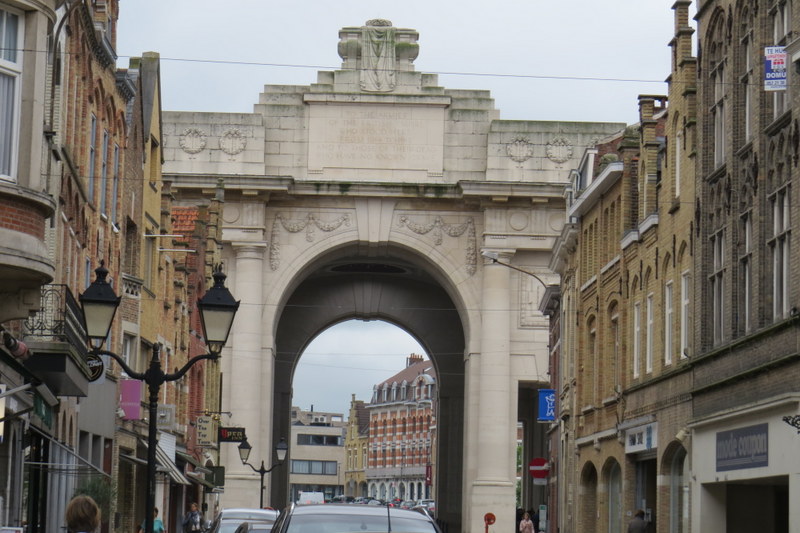
Menen Gate Memorial
Today Nicholas and I travelled to Ypres in Belgium and visited the Menen Gate Memorial which commemorates over 7500 missing in the Flanders Sector. Every soldier who fought there marched through the original gate which stood where the memorial stands now. At 8 o’clock every evening the traffic is stopped by a group of firemen who play the last post which is followed by a 2 minute silence. This has been a solemn practice since the Memorial was built. When the Germans invaded the town during World War Two, the trumpets were buried. When the Germans left they dug them up and the practice began again.
The Cloth Hall
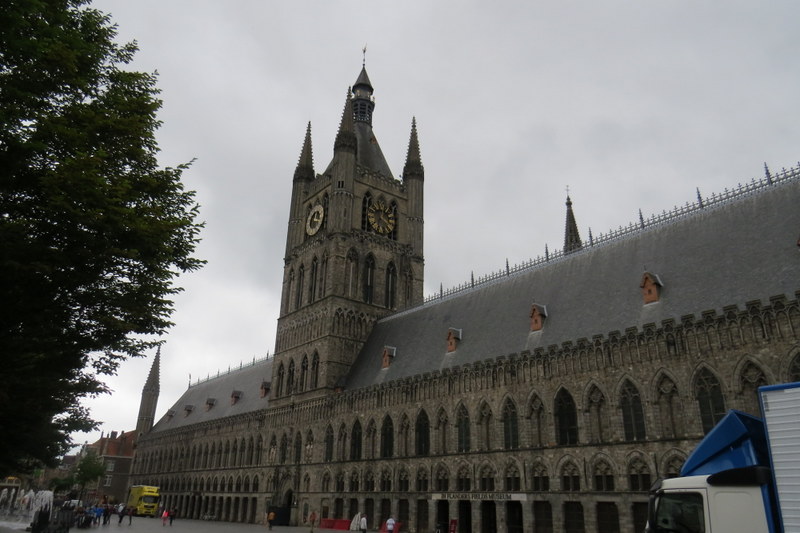
Iconic Building – Mediaeval Cloth Hall
All the buildings were destroyed during World War 1 but with German reparation the town was rebuilt during the 1920s. One such building was the Mediaeval Cloth Hall above.
St George’s Memorial Church
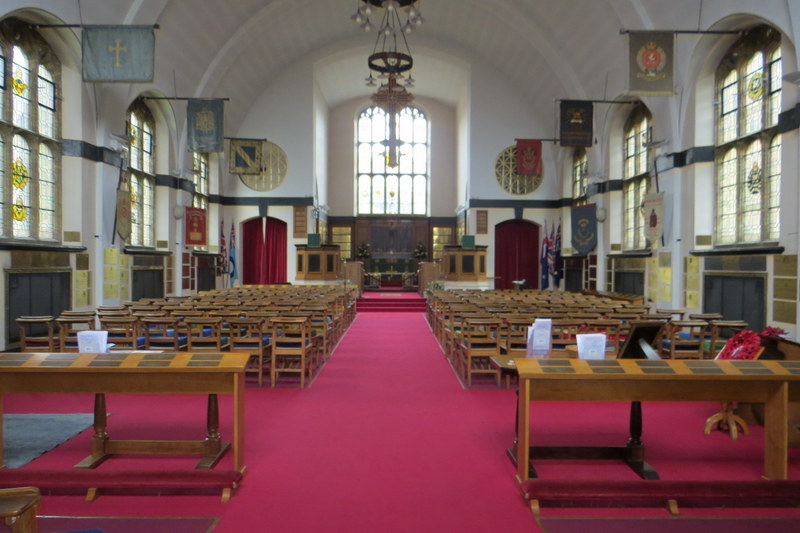
St George’s Memorial Church
St George’s Memorial Church was opened in the 1920s to provide a place of worship for the many English gardeners who came to live in Ypres to care for the war cemeteries. It is filled with memorials to men who paid the extreme sacrifice.

A memorial to Lee Rigby, Soldier and Drummer who was so senselessly murdered by extremists in London.
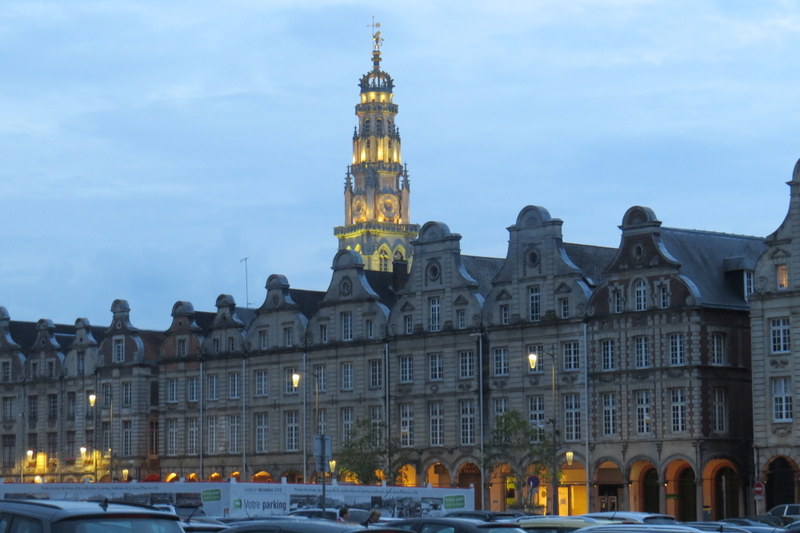
Ypres today

Town Square
The city of Ypres has a wonderful vibe. The people are friendly and we communicated with them quite adequately in Afrikaans. Those of my readers who know me will understand when I say – the coffee is to die for! Yes it was expensive but each cup comes with a chocolate or a biscuit – and I will gladly pay for a really good cup of hot, strong and black coffee!
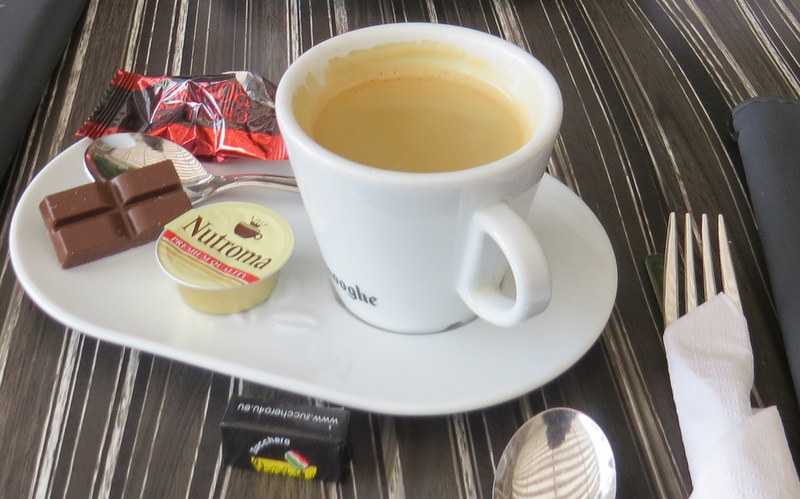
The Best Coffee
I felt quite special having my coffee served to me so stylishly.
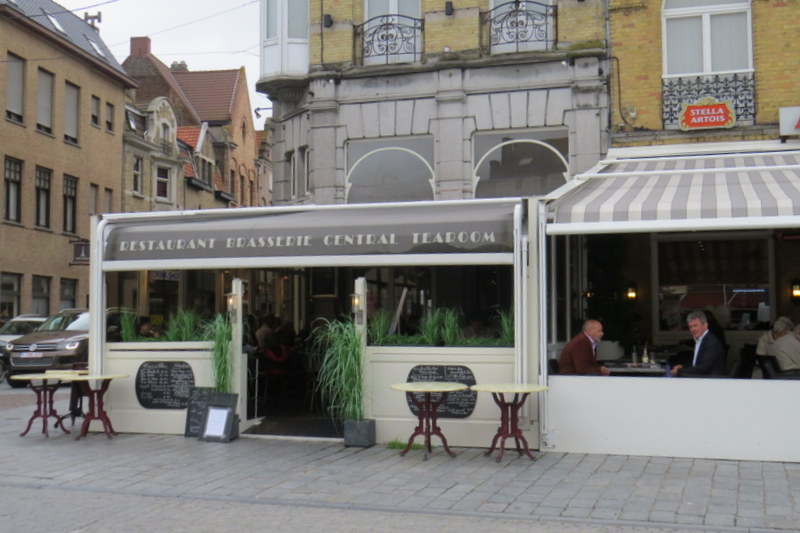
This was where we first had coffee and apple or cherry pie and later lunch.

Soup for me ham baguette for Nick
In Flanders Field Museum
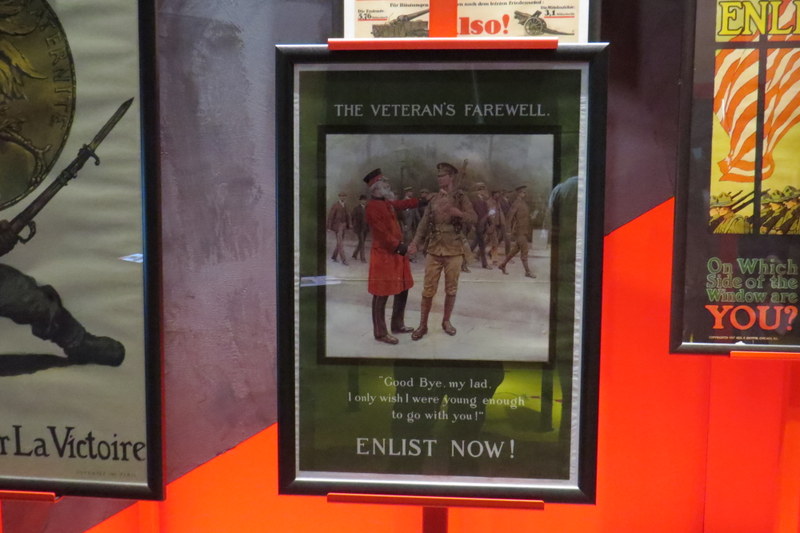
A Call Up Poster
New to Ypres is In Flander’s Field Museum. It occupies the second floor of The Cloth Hall. I found the exhibits moving and there was no glorification of war. Rather one was shown both sides of the story. There were videos and hologram presentations that told movingly told the real story of war.
War Cemeteries

Calais Southern Cemetery
Nicholas and I reluctantly left Ypres to complete the last part of our Battlefield Tour. We have a great-uncle buried in the Calais Southern Cemetery. Nicholas explained to me how all the Commonwealth War Cemeteries were constructed. The Commonwealth War Graves Commission was established in 1917 and this is what they decided to do about fallen soldiers.
- They used the services of the great architects of the time – Sir Reginald Blomfield, Sir Edward Lutyens and Sir Herbert Baker as well as Gertrude Jekyll, a prominent landscape gardener – to design the cemeteries of World War One.
- Each grave has a uniform headstone with the regiment badge on top, a religious symbol e.g. cross or star of David, or none at all. At the bottom the family could if they wished have an inscription added.
- Those fallen had to be buried where they fell.
- The cemeteries were from the outset intended to be democratic and non sectarian.
- Each cemetery has a War Cross and a War Stone in the shape of an alter.
- Kipling chose the inscription on the war stone and it is taken from the book of Ecclesiasticus Chapter 44 – Their name liveth forevermore.

The Jews put stones on their graves as an altar is a pile of stones and this represents a sacrifice to God.
Great-Uncle William Kenney fought in Rouen on The Somme. He was wounded and treated in the Casualty Clearing Station then transferred to a hospital train en route to The Fifth South African Military Hospital in Surrey, England. Because he became so ill on the train he was taken off at Calais and transferred to the Red Cross Hospital where he later died. He is the only South African buried in the Calais Southern Cemetery. Nicholas and I feel privileged that we have been able to visit his grave. His mother and sister (our grandmother) never had the opportunity.
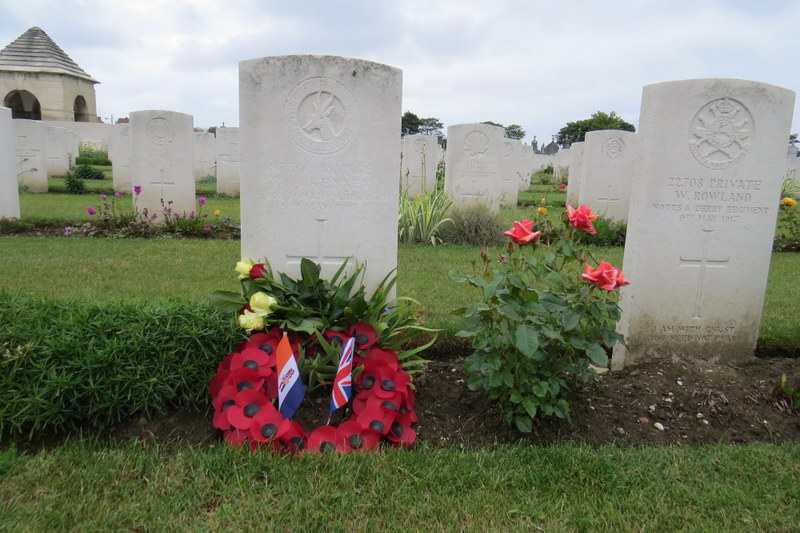
Nicholas laid a wreath and I flowers on Uncle WIlliam’s grave.
Ferry Crossing to Dover
We had a luxurious crossing in the Club Class lounge on a modern ferry leaving at 8:30 p.m. I felt so posh being served with a complimentary glass of champagne and snacks from the bar. There was no queueing for food but a menu presented and delicious food ordered. Coffee was on the house. We had newspapers to read and not rowdy children or teenagers to disturb our peace!
On the way over I did not get to see The White Cliffs of Dover but this time the sun came out specially and showed me a good view of them. After visiting war memorials the words of Vera Lynn rang in my head.
There’ll be bluebirds over
The white cliffs of Dover,
Tomorrow, just you wait and see.
I’ll never forget the people I met
braving those angry sky’s
I remember well as the shadows fell
the light of hope in thier eyes
and though I’m far away I still can hear them say
Sun’s up
for when the dawn comes up
There’ll be bluebirds over
The white cliffs of Dover,
Tomorrow, just you wait and see.
There’ll be love and laughter
And peace ever after.
Tomorrow, when the world is free
The shepherd will tend his sheep.
The valley will bloom again.
And Jimmy will go to sleep
In his own little room again.
There’ll be bluebirds over
The white cliffs of Dover,
Tomorrow, just you wait and see.
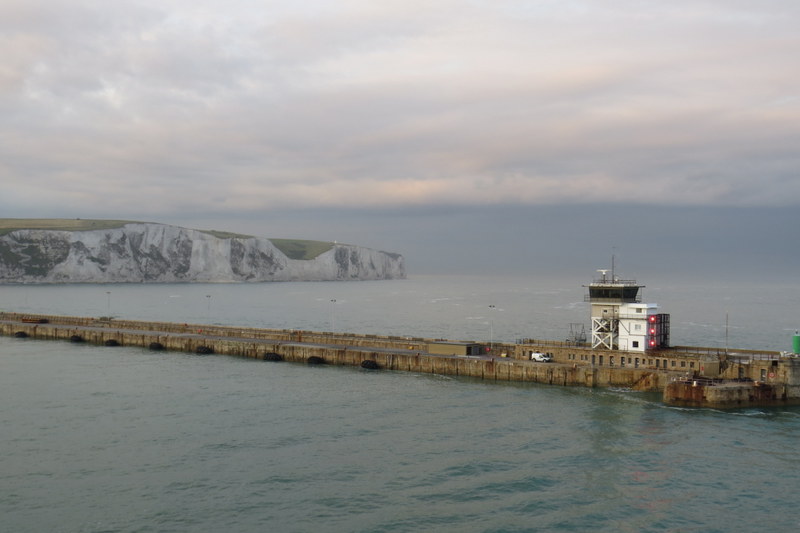

Oh yes – Our World is Free! Let us hope that the lessons of the past learned through these memorials and stories can keep us free forever.







 Diary of an Adventurous Retiree