
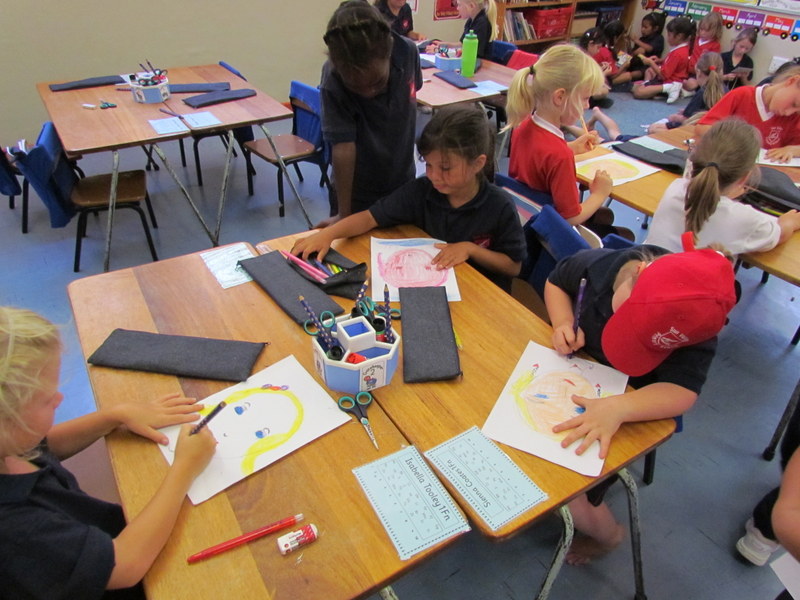
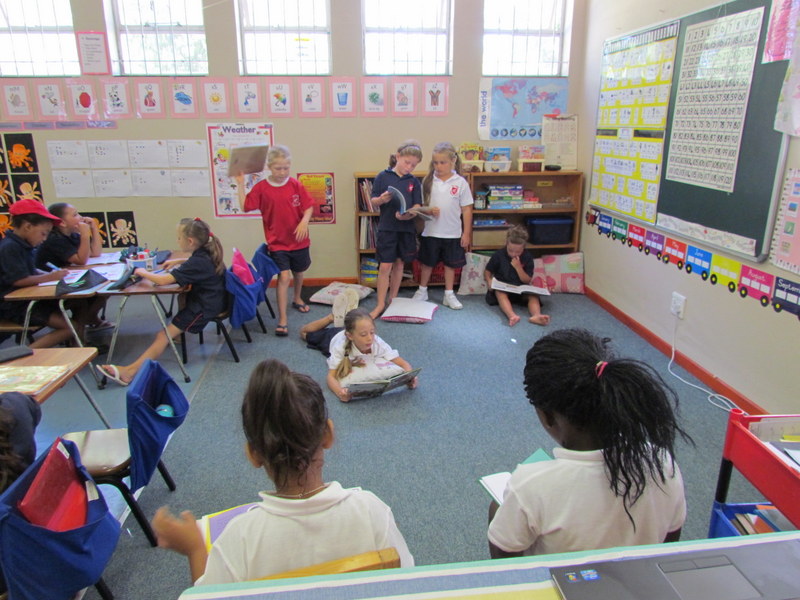
What is the most important thing a child learns when she goes to school? READING. We can’t get very far in the world without being literate and no matter how far we progress digitally – reading will always be a skill we require. The rate at which a child learns to read differs greatly and in a Grade One class it is possible to have children on six or seven different levels. The challenge for the teacher is to keep them all interested and keen to read with enjoyment.
At school we concentrate on teaching reading skills – decoding, encoding, sight words, using contextual cues, phonic cues, picture cuest etc. We use a graded Reading Scheme. Each level has one ‘Primer’ and three shorter supplementary readers with the same vocabulary plus a few new words thrown in. We keep the children at a particular level until they know the vocabulary out of context before moving them on to the next level. In addition to the books in the Reading Scheme we allow them to take other children’s books home. These have been roughly graded to fit in with the scheme book level but of course they too will have unseen vocabulary in them. Sometimes a long story can be very easy. Sometimes a short story can be quite challenging. The thickness of the book doesn’t necessarily determine how difficult the words are to read. The aim is simply to expose the children to the written word and for them to enjoy books.
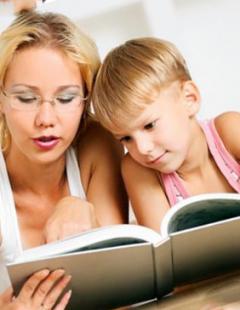
How did the pioneers of old teach their children to read? They usually had only one book – The Holy Bible. Quite a daunting book to use as a primer! Yet they did. How did they manage? They read it to their children. The stories became familiar. Eventually the children started to recognise words as their parents read to them. They read together until the child could read on her own. So don’t be afraid to expose your child to a book that might be too difficult for her to read on her own. Share the reading with her. Introduce her to different authors. Talk about the cover, the title and the pictures. Get her to anticipate what will happen next. Discuss the message or moral of the story. Ask questions like What does this story teach us? How else could it have ended? Which was your favourite part? What did you like about the story? What didn’t you like about the story? It will depend on your child how much you discuss the story. Keep it simple and fun.
Often a parent might say – My child is reading her book – but she doesn’t really know the words – she reads off by heart. Don’t worry – this is part of the process. Let your child read the same book as often as she wants to but insist that she points to the words as she reads. Eventually those words will become so familiar that she will recognise them in other contexts. Remember too that reading to your child is more important than your child reading to you. You should be reading to her every single day. It should become a ritual – before bed is a good time – a wonderful way to get her settled for the night. Sit with you child in such a way that she can see the words as your read. Point to the words as you read and even allow her to read the easy ones if she wants to. Getting her to guess what the last word in the sentence is, is also excellent. Part of reading is inferring what the word could be. I never correct a child is she reads a word that is different but means the same as the one in the sentences. E.g. if she reads boy for lad – it’s okay – she has the sense of the sentence correct.
Some parents are worried that their children are reading books that are too easy or not challenging enough. Your child might bring home a book that is very short or easy. Remember that books sent home are to be enjoyed with your child. Sometimes they might be easy – sometimes a bit more challenging. If they’re too difficult let her read what she can and you read the difficult words with her. Once again – point to the words as you read. Discuss the story and help her anticipate what might happen next. If it is too easy and she reads it effortlessly in five minutes and then doesn’t bring another one home for a few days – don’t hesitate to read from your own book shelves or from the library. What is important is that your child is not only reading but being read to as well, the latter being the most important.
Here is a link to an earlier post regarding Reading to Children
https://puppy1952.wordpress.com/2013/09/07/back-in-the-classroom-reading-to-children/
Reading is not of course the only thing we learn at school. Number work is also important. We have been having fun with Mathematics and Money has been on our minds. It is amazing how money helps to teach number concepts. In the good old days I used to bring real money into the classroom but there is little you can buy with coins these days and credit cards have taken over so I don’t usually have denominations of R100 and R200 lying around in my wallet! But there is some very realistic pretend money which works just as well! So we have been playing with that. A good chart also helped and the girls were pretty good at pointing out the different coins and note. Great fun was had making a ‘coin’ die although there was some frustration when some of the little fingers couldn’t quite manage to glue it together. Luckily the more adept ones were willing to help!

What can we buy for R1,00?
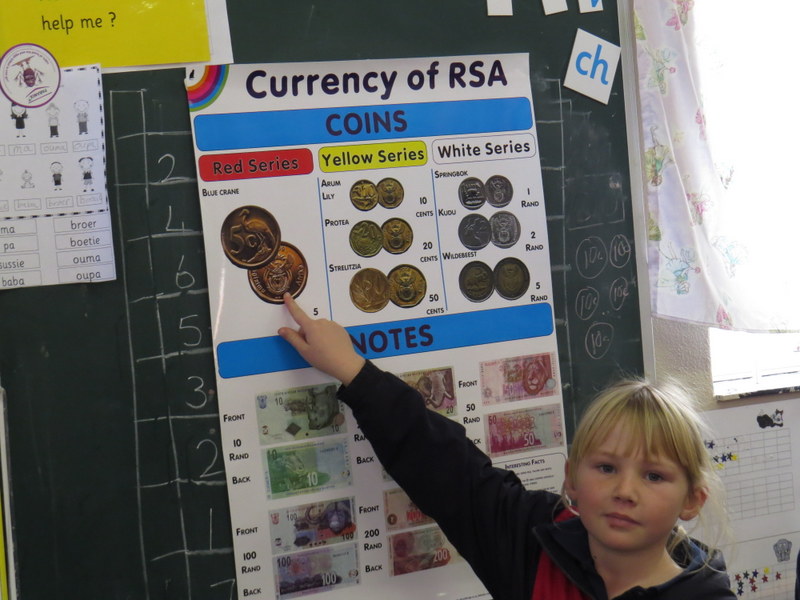
Not even the tooth fairy brings 5c coins anymore!

R5 is a bit more valuable.

R50 in my birthday card would be okay!

A R200 note is the biggest amount – Just the right amount for a clever girl!

Two like this will be okay for this amazing lass.

Making the die cube

I’m ready to cut it out.
Today we had our Grade One cake sale. It was lovely to see that the girls were very aware of how much their money could buy! They spent their coins wisely and came back to class on a phenomenal sugar high! Who was the parent that sent those toffee apples! I’m not sure how much we made – but everything went! Thanks to the moms who baked, those who sent donations and the three fabulous ladies who did the selling! You were awesome and I didn’t even have to miss my break!

My R10 can get me quite a bit

Now what shall I buy

What lovely treats

I am going on a sugar high!

Yummy Toffee Apple
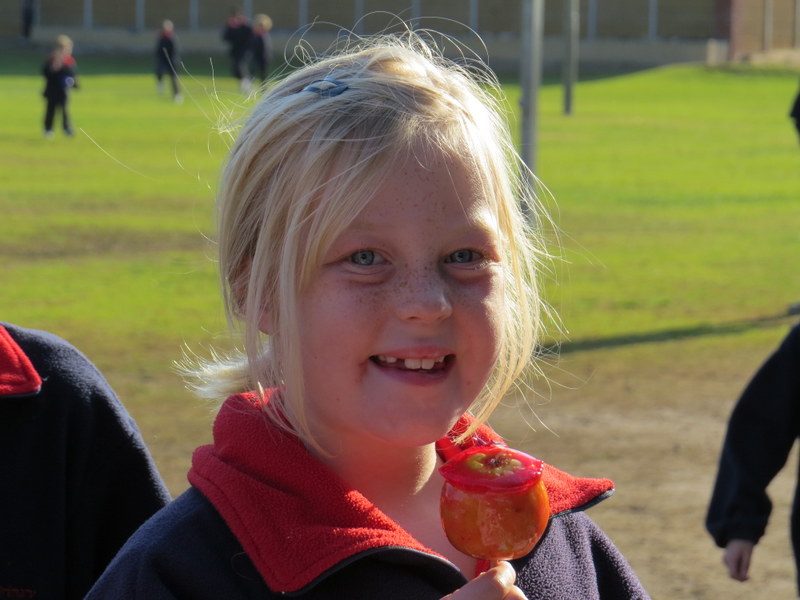
They were a hit!












 Diary of an Adventurous Retiree
