0

Caravelle Cruising in Kruger – October 2011 – Day 10

Tuesday 25 October 2011 Mopane to Olifants

At quarter to six we were all packed and ready and a little sad to  depart  from our charming Mopane Accommodation.  Our first creatures of the day were a small herd of waterbuck and a variety of swifts – Little, Horus and Black were once again flying over and under the low bridge.

We’d just relaxed into our journey when the first excitement of the day occurred.  Earlybird spotted something on the road ahead of us.   A korhaan.  “It’s got it’s red crest up,” I said in awe.
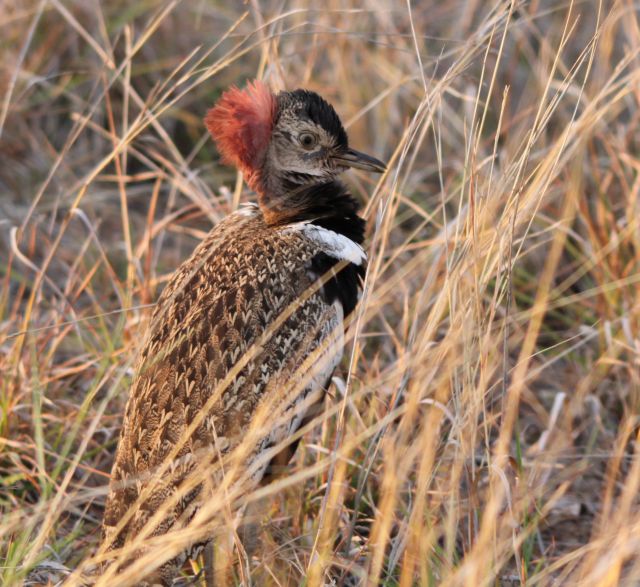
We have seen this bird many times but never ever with its crest up.   We got ourselves into twists and knots and ungainly positions to get the perfect photograph.  He was completely oblivious of us because he was in courting mood but the indifferent female a few meteres away simply ignored him and pecked away at the ground having her breakfast.
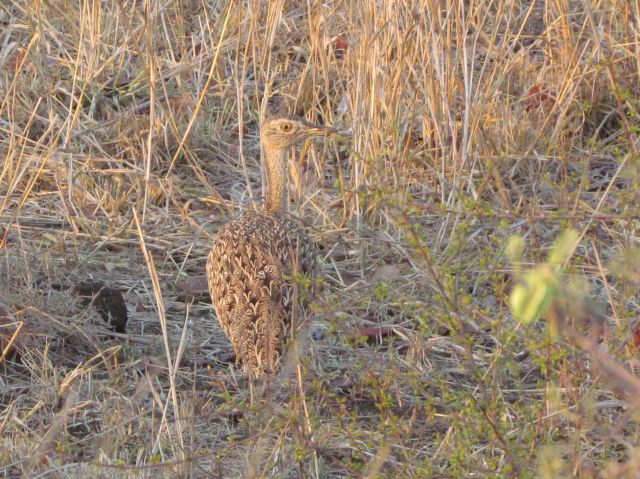
Female Red-crested korhaan

He must be feeling really sexy came one comment – Koraan Erectus retorted another.

We watched this display for ages and eventually he pursued his desired and she skipped through the long grass and then onto the road to the other side where he chased her with the crest spreading and closing but despite his best efforts to win her favours she refused him and he had to give up.
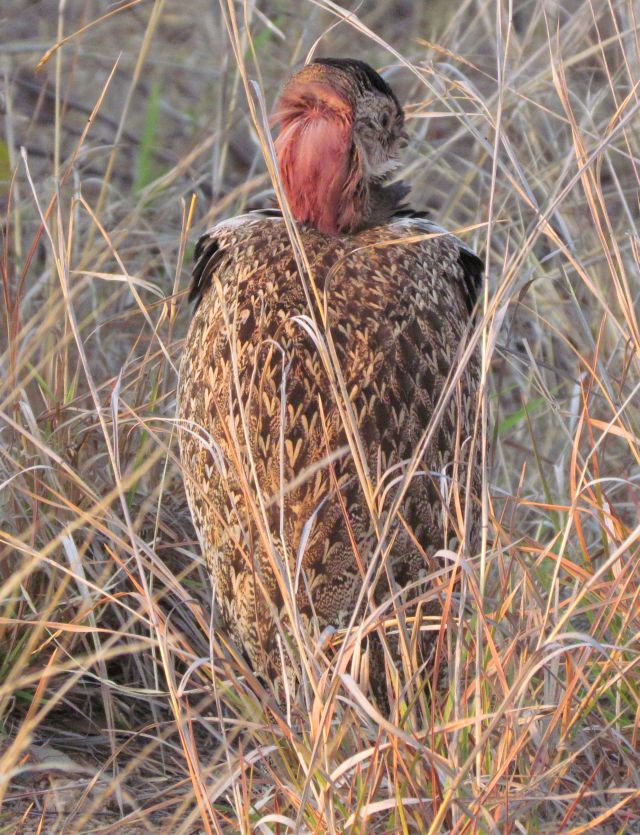
Wow – what a great start to the day.

Next we went to see if anything was happening at the buffalo carcass.  We were well rewarded.  Standing aside in anticipation were a pack of jackals.  We saw two lions from our view point.  We decided to move higher up the hill although it was further away and from there saw that the lions had gone and the jackals were on the kill.   We returned down the hill and then saw 7 lions lying a little way off from the carcass.  The jackals were feasting and fighting for the best morsels and kicking up dust in their scuffle.
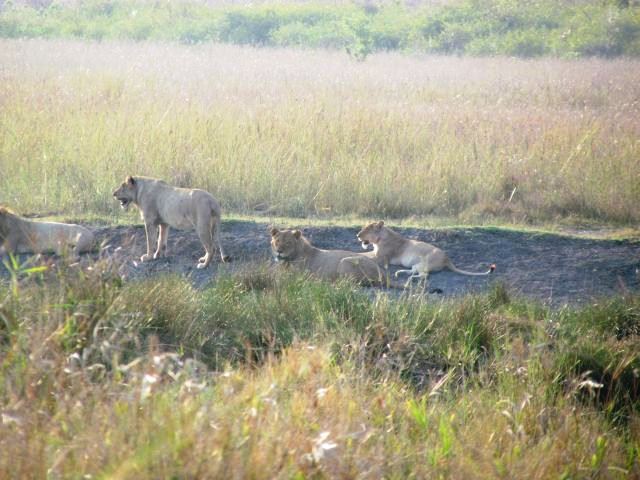
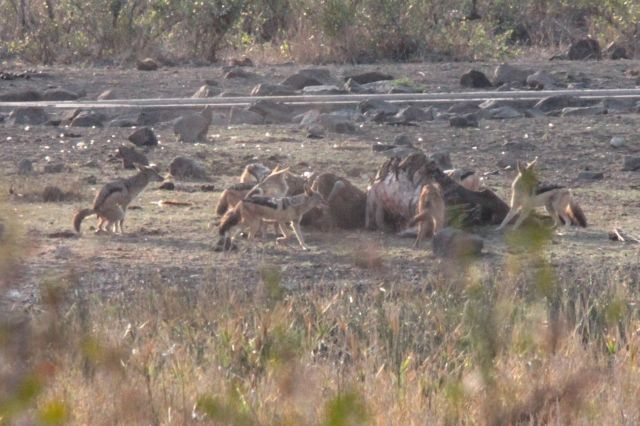
It was great to have this sighting to ourselves for quite a while. When other cars arrived, we’d had our fill and moved on.

The early morning start was indeed rewarding.  A little later, we came upon a water hole and in the trough two cheeky hyena were having a bath.    They just sat there enjoying the cool water and then a wildebeest appeared in the trees behind them. They were immediately alert and we thought there might be a stand off but the clever gnu decided to keep his distance and kept to the shelter of the trees.
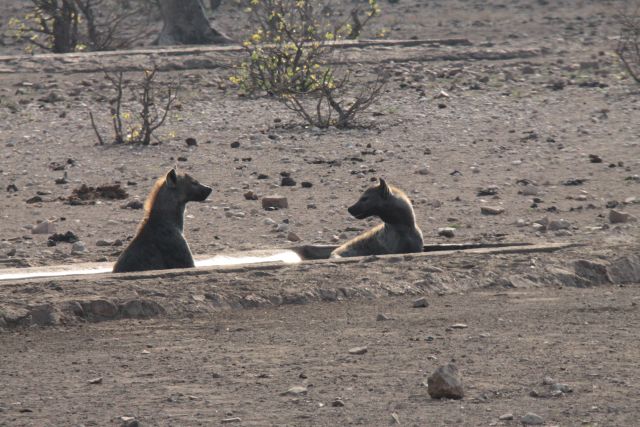
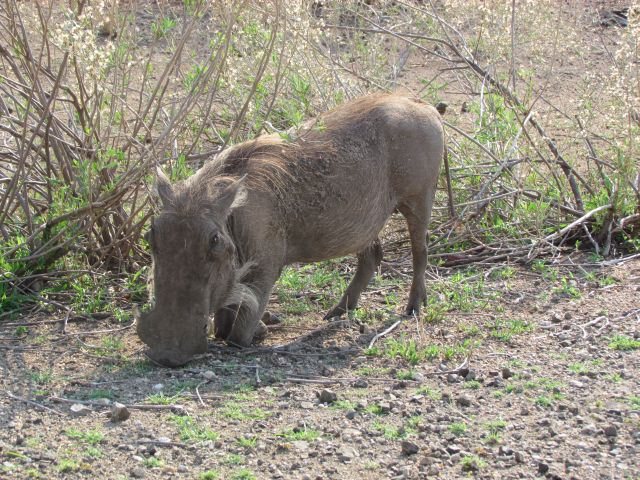
We continued to Malopenyana waterhole, met some warthogs and observed a greenshank beside the waterhole.
Further on our route we found a tawny eagle in a tree and a fish eagle perched close enough for a portrait.
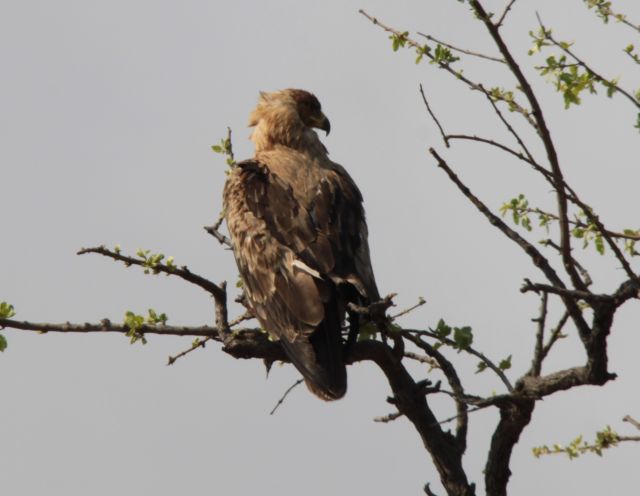
Tawny
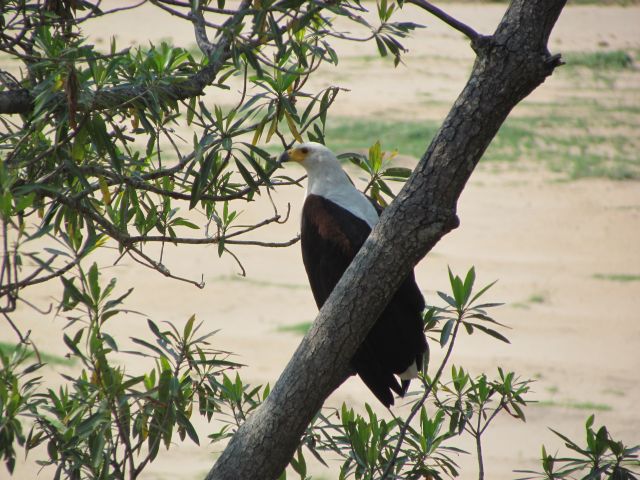
Fish Eagle

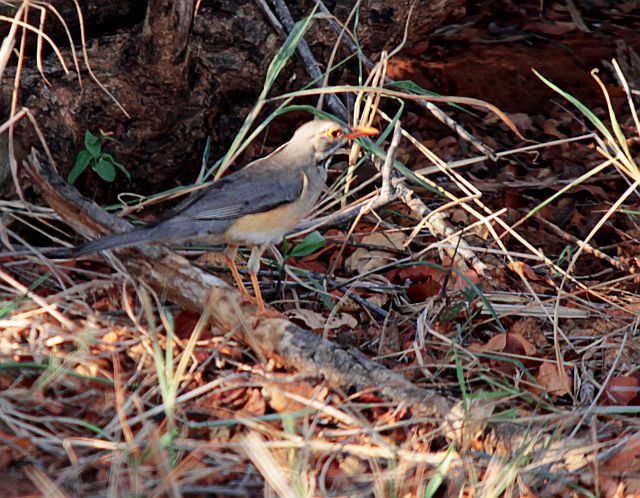
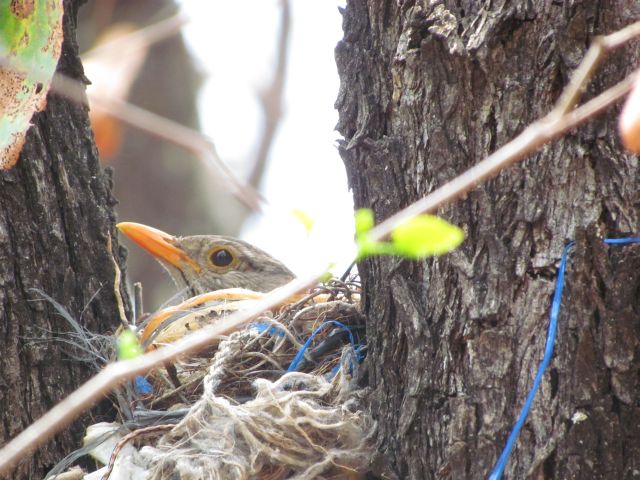
At 9 o’clock we stopped for a welcome breakfast at Letaba rest camp and found the food quite satisfactory.   Earlybird had the bushveld breakfast, Eec the croissant tower, H2 the chicken burger and I had toasted egg and bacon.   We tried to find the Scops owls in the campsite trees without success but did find a Kurrichane thrush sitting on her nest.
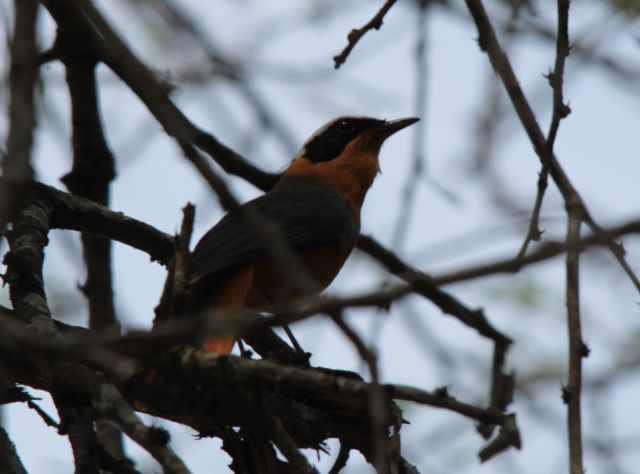
While Earlybird checked the sightings map at the shop we heard the tuneful song of a Heugelin’s robin and eventually located him at the top of a tall leafy tree.   What a beautiful bird.
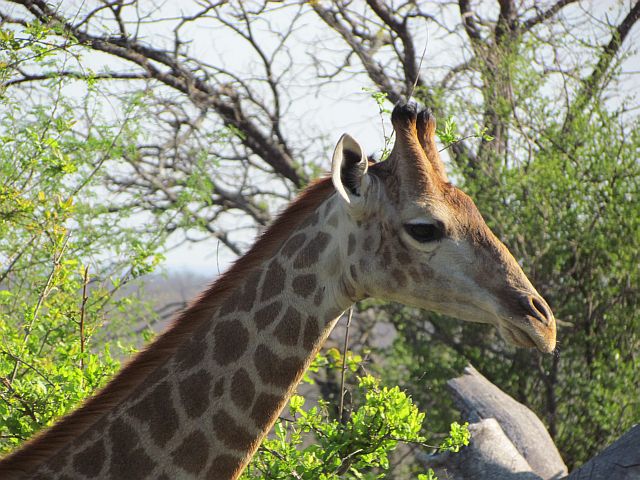
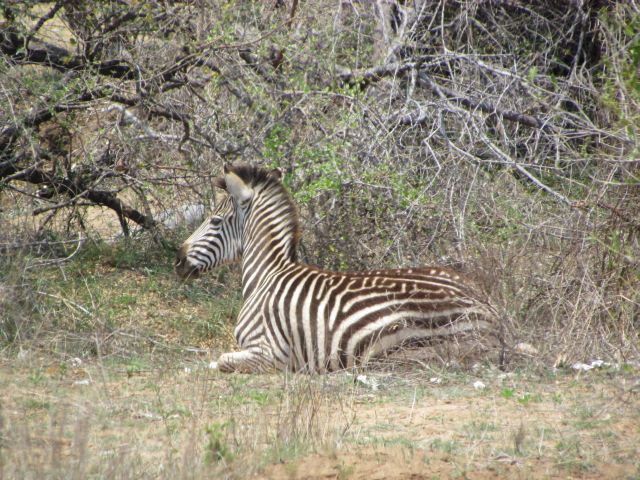
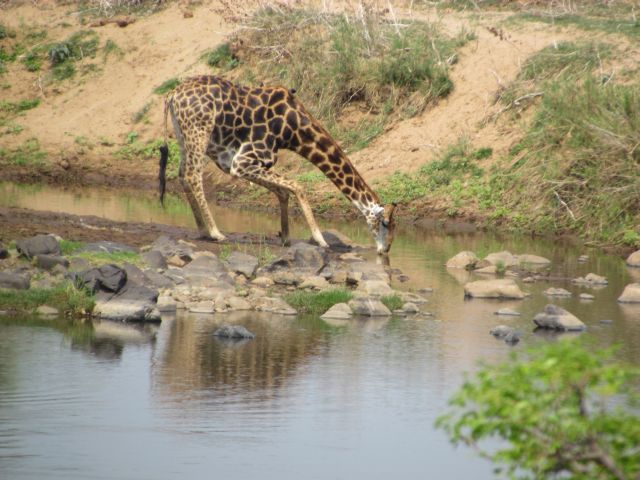
Our route took us alongside the river and we saw lots of animals and birds.   Giraffe delighted us, impala were ever-present, some zebra rolled in the dust, and we watched elephants swimming and playing in the river.
On many previous trips we have crossed a certain ford where terrapin come rushing out to meet any passing vehicle.
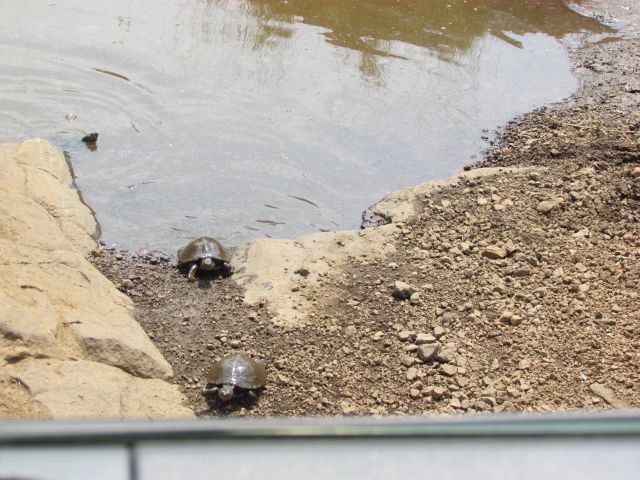
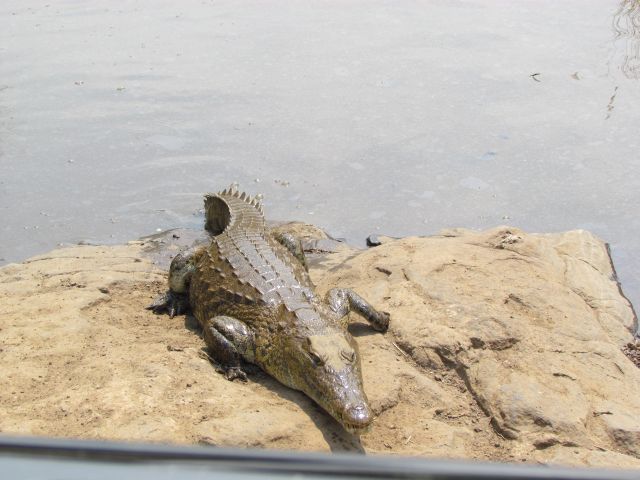
We are certain they do this because somebody started a practice of feeding them and they have learnt that an easy meal may be forthcoming.   Sure enough when we came upon this stream where there is just a pond of water on one side the little critters came begging again.  Last year in their midst there was a baby crocodile and he was there still – only now he was twice his previous size.  I wonder what he will do when he outgrows the pond.    He lay dead still with only his eyes and nose above the surface but eventually came out onto a rock and showed us how fearsome he really was.
At a lookout point we gazed down to see hippo parked off beside the river bank, elephants bathing, saddle-billed and yellow-billed storks and fish eagles from time to time.  It was lovely to see so much activity in this area of the park in spite of it being a very hot day.
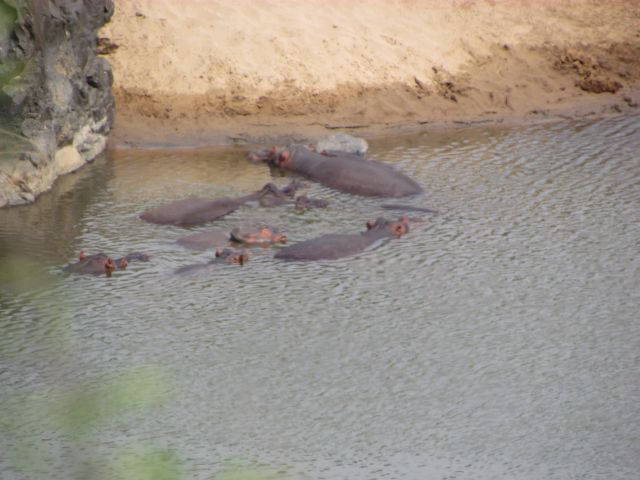
We arrived at Olifants Camp at half past one and went to check in.  Of course I was smiling and delighted to be at one my favourite camps.  “How did you enjoy, Mopane?” asked the clerk.   “Lovely,” I replied. “It is a very nice camp?”  “Better than here?” he asked.  “Oh no,” said I diplomatically. “Olifants is my favourite camp.”  “I can see that,” he said, “because you are smiling and look very happy to be here.”  Then Earlybird came in also with a smile on his face and he said – You must be together because you’re both smiling!”

He explained all the activities on offer and said that all wild card holders would be offered a 20% discount.

We were given keys for hut 7 and 8 and were delighted with the fantastic river view that we had.
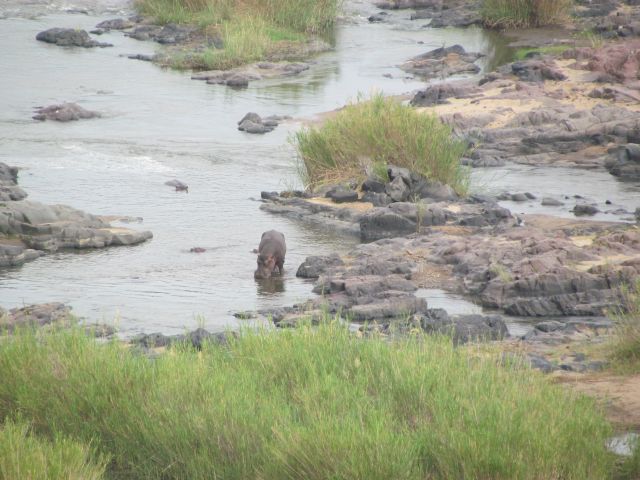
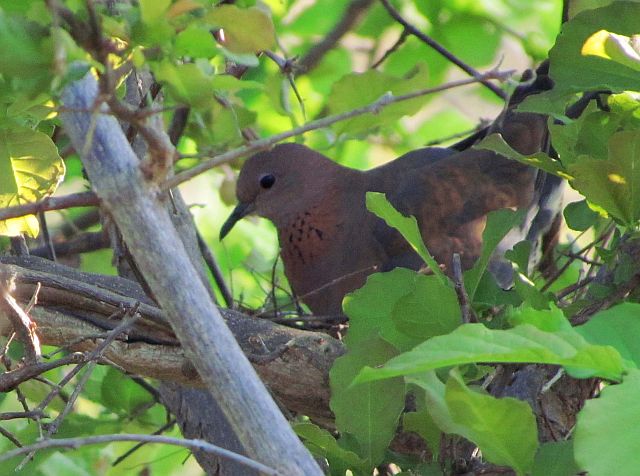
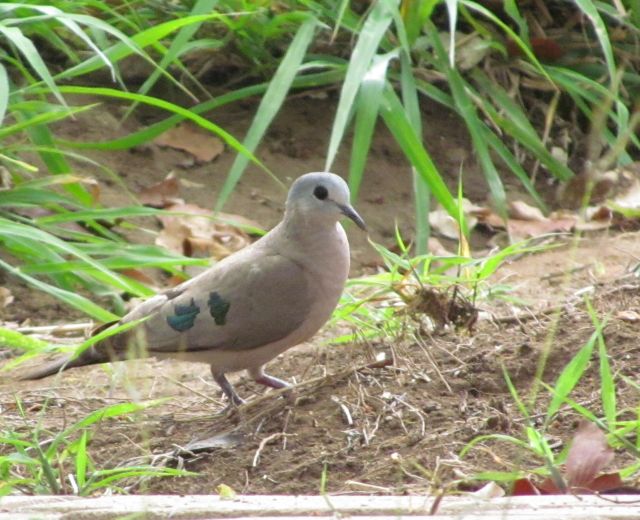
We unpacked and relaxed on the stoep for a while – although the heat was extreme.   But we saw a Diederick’s cuckoo, a puff back with his white rump in full fluff, a green spotted dove strutting about,
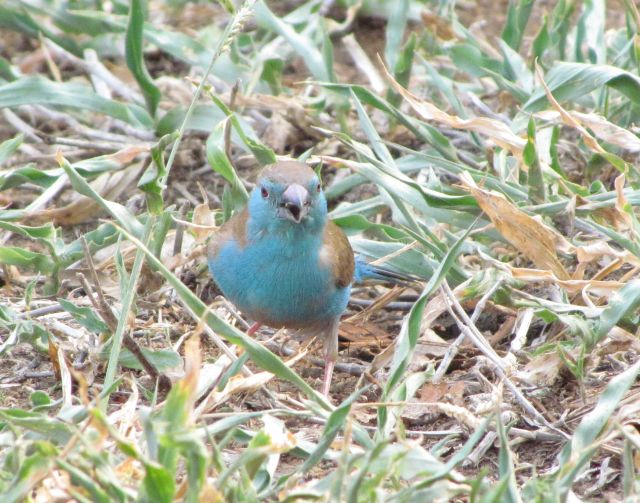
blue waxbills
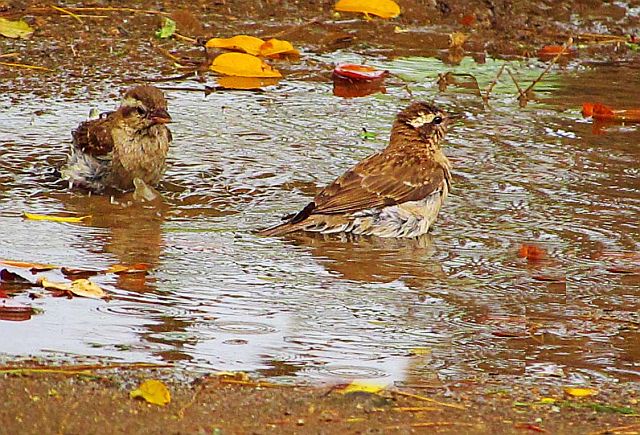
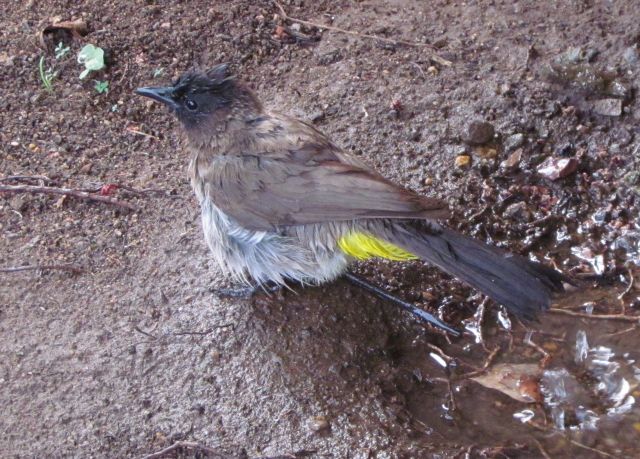
and a bul-bul having a bath in a puddle made by the aircon’s condensation.
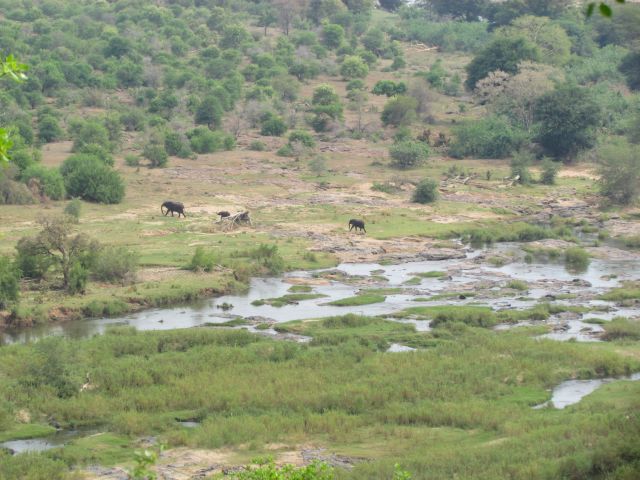
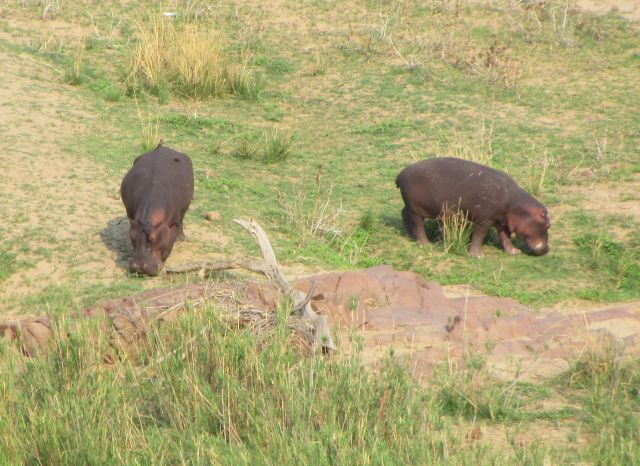
In the river elephants came down to drink, hippo were grunting and getting out onto the rocks, zebra were nearby
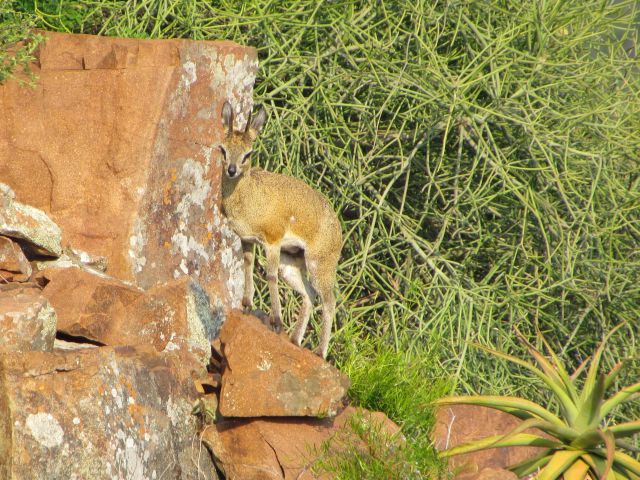
and to the left of our hut Eec alerted us to a klipspringer nimbly climbing up to a flat rock where he stood and stared at us, possibly wondering what kind of creature we were.
I did not want to go out again as it had been a very long morning.  But Earlybird was eager to get out and seek the leopard that had been reported on the tar road.  By 4 o’clock we’d all rested in our huts and agreed that it would be great to be in the air-conditioned vehicle for just another two hours.   Well what a rewarding trip it turned out to be – not far along we saw a traffic jam – it had to be the leopard.  But no – one of the car occupants told us there were lions right next to the road.   We managed to spot them through a gap between the cars – a pride of at least 6 sleeping adults, paws in the air, tummies bloated, some on top of each other and then to our delight – 4 tiny cubs.  I managed to get a piccie of one with his head up.
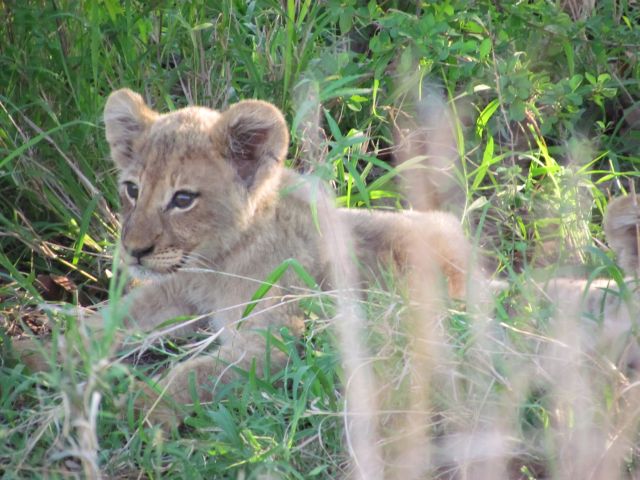
We did not stay more than three minutes as other cars were coming and we’d seen and taken our pics and there’s nothing I hate more that traffic jams at sightings.

We went as far as the Olifants bridge crossed over  then retraced our steps.   We saw a fish eagle flying toward us, African pied wagtails, a pied kingfisher and common sandpiper.
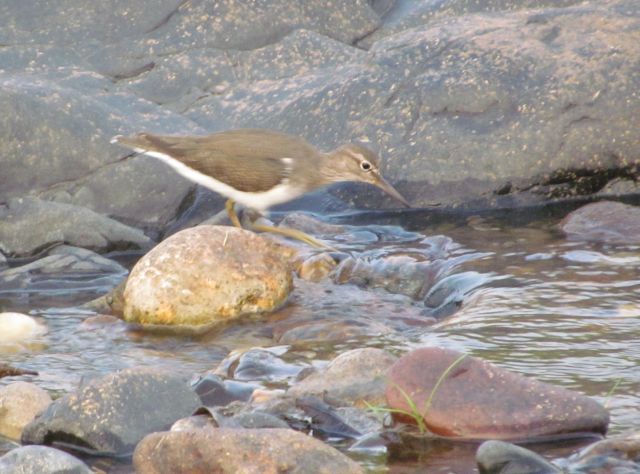
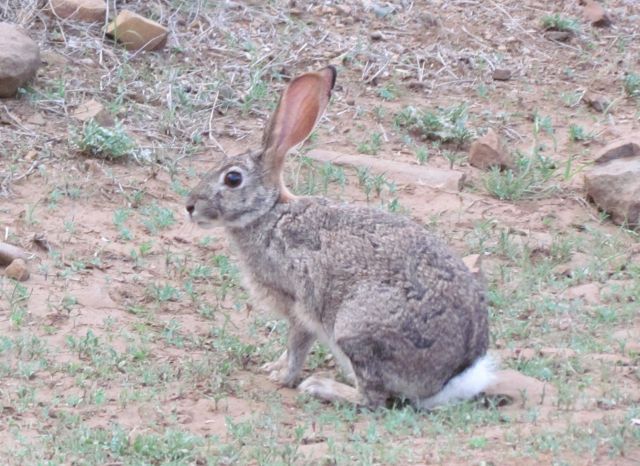
It was 5:35 and we needed to get a move on to make it back by gate closing time.   Earlybird kept to the speed limit which is fast if you want to spot things but we really did not have the time.  However, I yelled stop – when I saw a bunny on the side of the road.  He was sitting perfectly still and just begging for a photograph.  It was a scrub hare and did not hop away but continued to have his supper quite unconcerned by our curiosity.
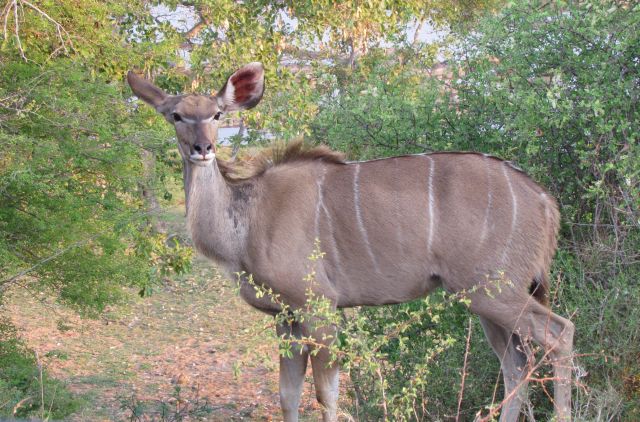
Our last sightings of the day were a few female kudu
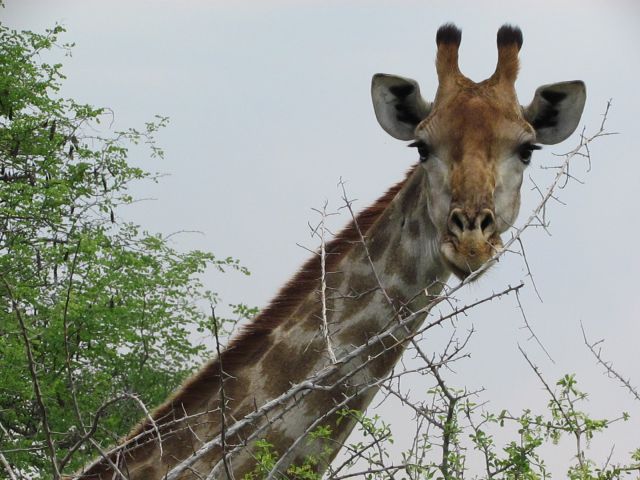
and a journey of elegant giraffe browsing lazily on succulent leaves.   What lovely gentle and graceful creatures they are.   How creative is God to make such diverse and interesting creatures.

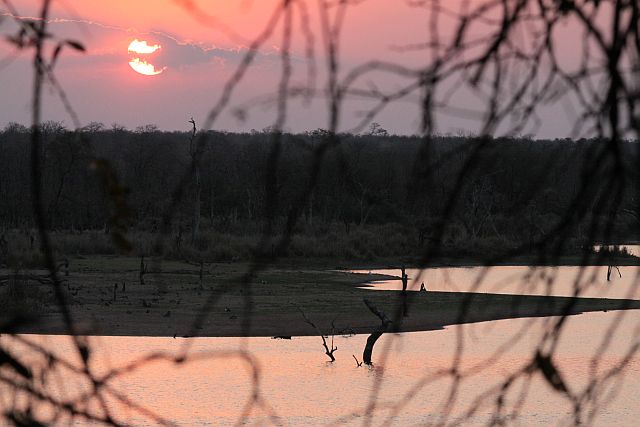
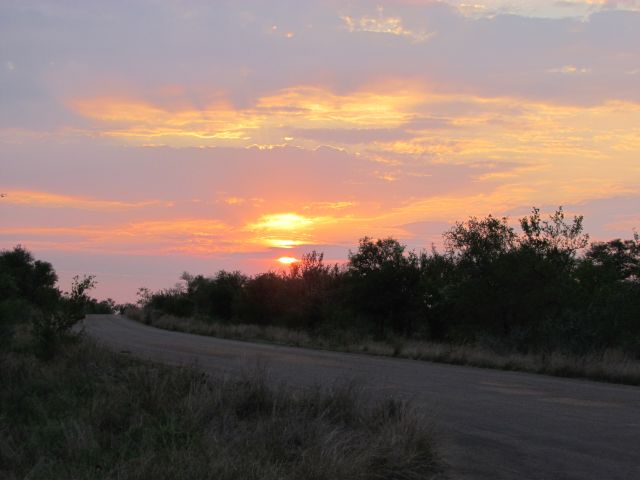
What a beautiful sunset we had to complete our day.
We enjoyed a supper of pan fried ostrich steaks, smash, beetroot, three bean salad and Greek salad before retiring for the night.  It was hot and we were tired but very happy after such a fantastic day.
0

Caravelle Cruising in Kruger October 2011 Day 9

MONDAY 24 OCTOBER 2011 MOPANE
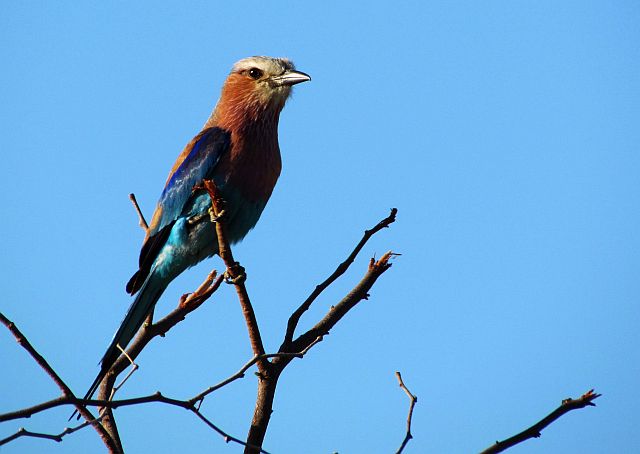
Because of yesterday’s heat we plan to be up very early, go out for a few hours, then return in the heat of the day. But it is only 20 when we leave and the day is so much more pleasant because of it. We leave at quarter to six and our first birds of the day are Little Swifts then a lovely lilac breasted roller posing beautifully as he so often obligingly does. The elegant long-necked giraffe are up early and of course so are the impala.
Every so often we stop to enjoy bird activity and the little finch-type birds are very active this morning.
We pull into one of the afrits and find a car parked with its occupants staring up into the trees. We pass by and park back to back. I look back and spot a yellow ribbon on the driver’s mirror – I catch the attention of the lady in the back seat and call to her – Hi I’m Puppy – what’s your forum name. “I Love Meerkats” Lovely to meet you and hope the rest of you trip went well.
The bird that we hear calling is a striped pipit. Lucky I Love Meerkats for seeing the orange breasted bush-shrike. We don’t find it at all.
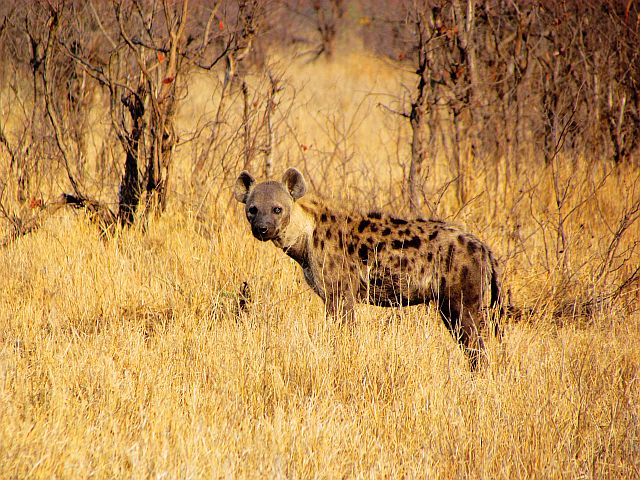
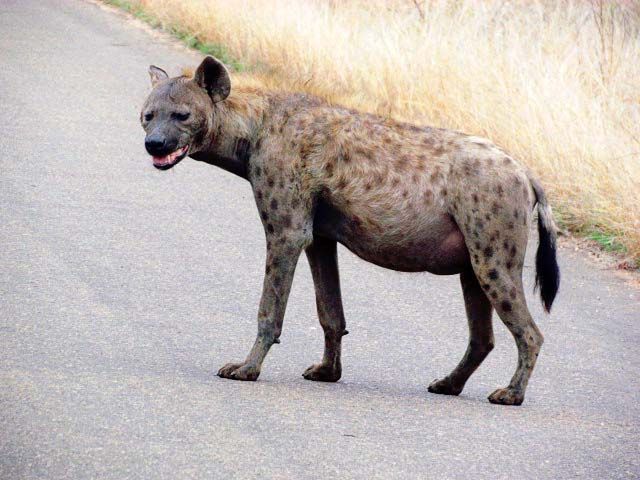
Soon after this we find a hyena – pregnant I suspect – walking along the tar road. We follow slowly behind and she turns to look at us then goes off-road into the yellow grass. We keep her in sight and soon she emerges and eventually crosses the road so we manage to get some photographs. Then she investigates a ditch – decides it is not to her liking and moves back onto the road and continues her hike.

We leave her to her duties and turn down the S142.

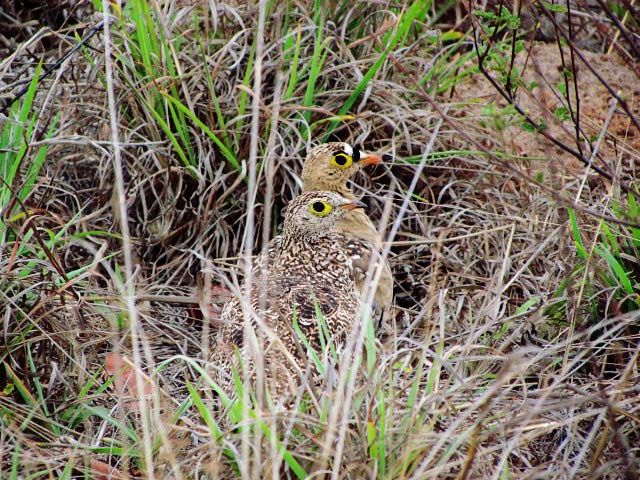
We are delighted to see a red-crested korhaan call in flight and then curl up into a ball and drop to the ground. He scurries off into the yellow straw-grass and makes photography a bit difficult. While I am trying to capture him on the left, EEC draws our attention to two double banded sandgrouse on the left and these we manage to digitalise before they step off in the opposite direction.

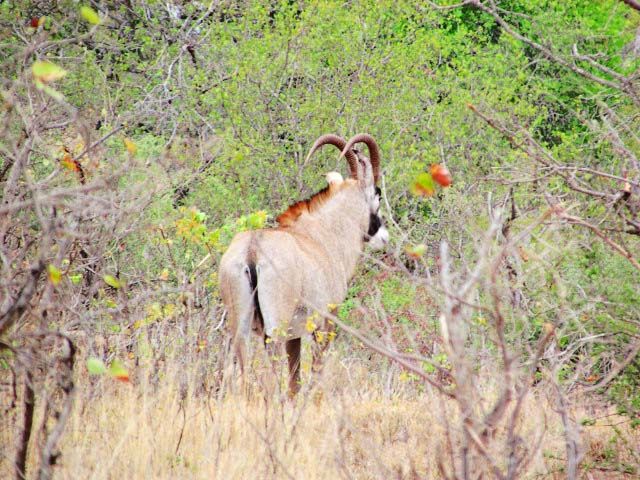
Later we almost see a Roan Antelope – well we see a back view and nothing in photoshop helps me to get him to turn around!

At Fraser’s rest we find a wide open plane and in the distance a waterhole. We are fascinated to find eland which I’ve never seen in Kruger before. They are skittish and the whole herd come down a slope and head for the waterhole. There are giraffe, zebra and impala too and all these creatures together create a lovely African scene.
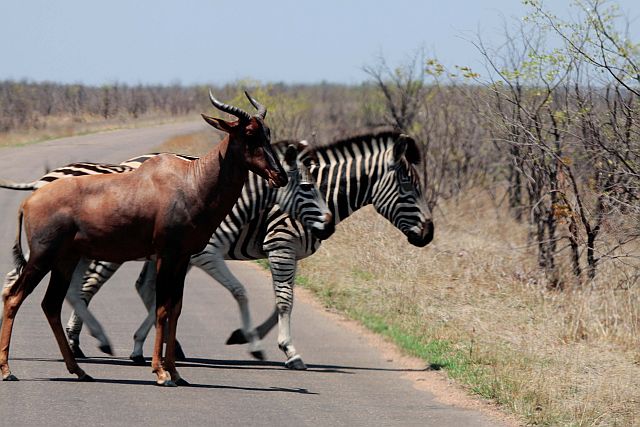
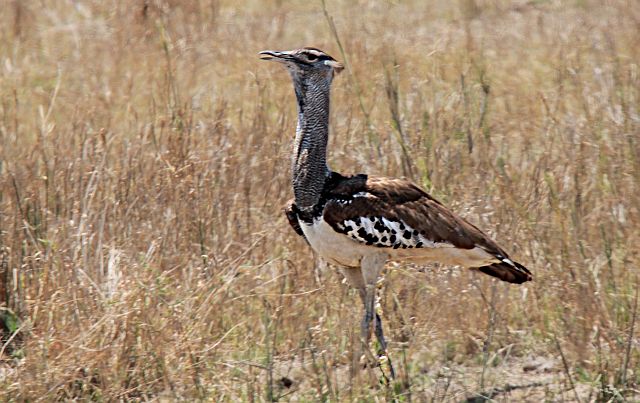
After visiting the hides at Pioneer’s Dam and the sleepover dam where very little activity is taking place we returnto Mopane. Earlybird stops at reception to update and check the sightings map – and returns with a look that says iit all. “What did we miss?” I ask. “Lion and rhino,” comes the reply. “But it’s only 7km to the water hole – shall we try or not?” It is only 11 o’clock and we figure that now is the time to go as they will probably disappear by the time we try in the late afternoon. So off we go – and I’m so glad because on the way we get tsebe and a kori bustard.

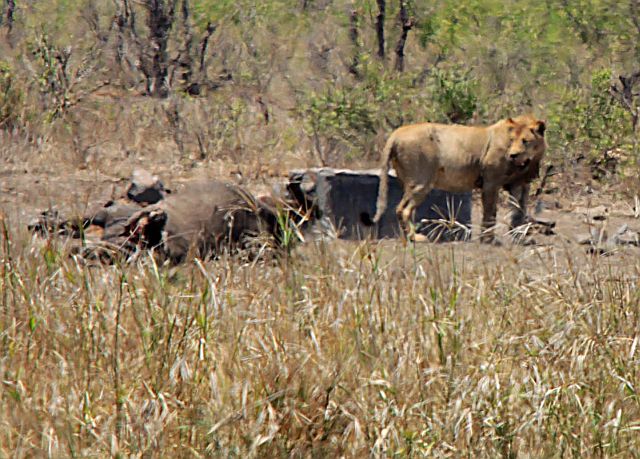
At the waterhole we find one other car – what a pleasure. There are no rhino but a single lion is dealing with a buffalo carcass and the vultures are lined up and waiting. It is quite a distance from the lookout point but with our binoculars we have a spectacular view all to ourselves because the first car leaves soon after our arrival having seen the three other lions before they left.

So that concluded a special morning. On the way back all the things we’d seen were gone.
We go out again in the late afternoon and enjoy some good birding.
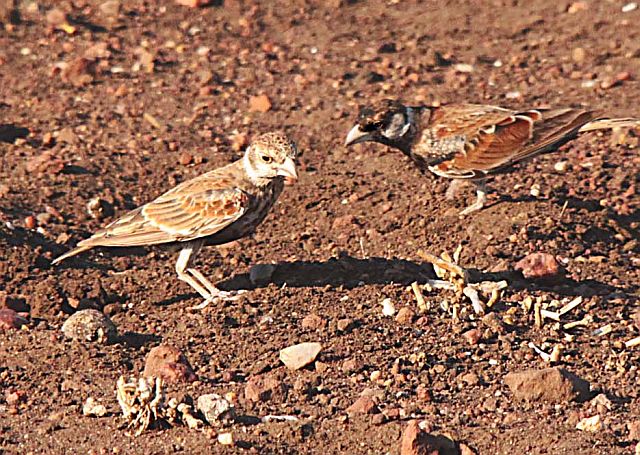
The sparrowlarks comourflage well but we manage to get a photo or two.

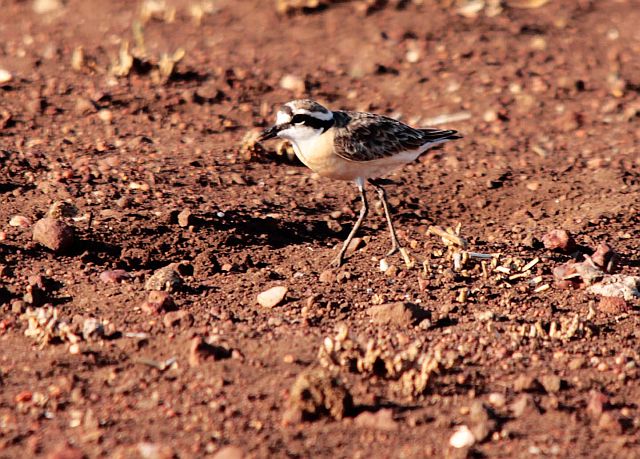
A Kittlitz plover blends in too.

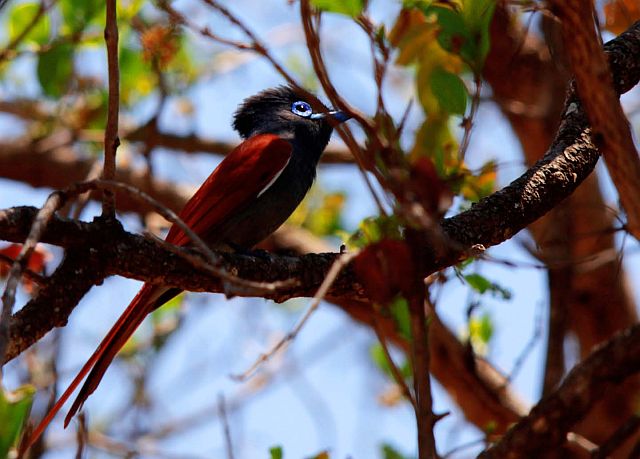
Near our cottage we find a paradise flycatcher

The sunsets in Kruger are wonderful and we sit contentedly with drink in hand and just chill.

0

Caravelle Cruising in Kruger October 2011 – Day 8

SUNDAY 23 OCTOBER 2011 PUNDA MARIA TO MOPANE
By 6:11 we are all packed up and sadly bid farewell to lovely Punda Maria. It was a delight to spend three days in this little rest camp.
We travel a short way on the H3-2 and our first creatures of the day is zebra. The first birds are glossy starlings followed by a kurichane thrush in a tree.

Kurrichane Thrush

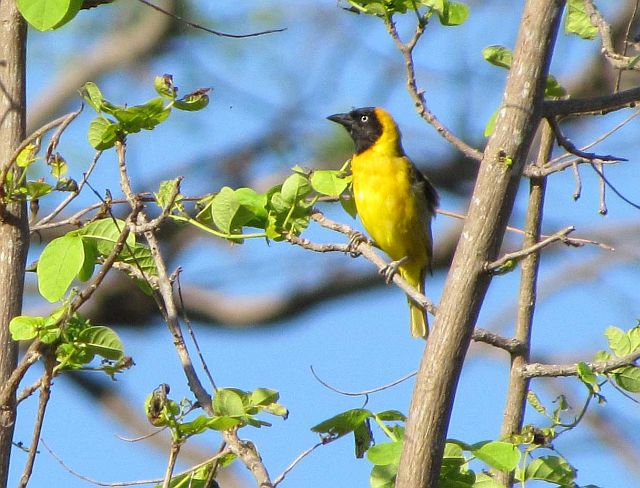
Here is one of many masked weavers we saw.

And the ever-present lilac breasted roller

We turn onto the S58 and travel though beautiful green, wooded areas and meet up with herds of giraffe, zebra, impala, buffalo elephant and have many encounters with parties of birds on our way.

One joyful area reveals red-billed buffalo weavers, masked weavers and and red-headed weavers busily fussing about in the foliage of the beautiful trees. We find a laughing dove on a nest and watch her mate visit her regularly but he does not seem to be bringing morsels of food.

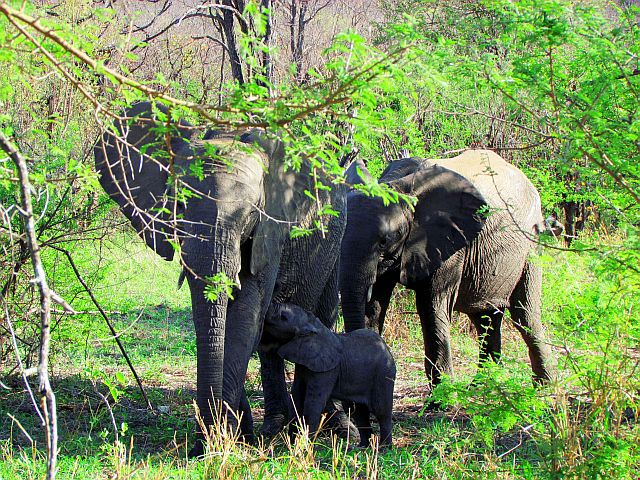
A group of elephants surprise us as they are not particularly big. We think one of the females is a mere teenager herself but she is suckling a tiny baby – well tiny for an elephant anyway. Earl quips, “They must be pygmy elephants.” My personal opinion is that they are just a very young group – the only mommy in the group is only just beginning to sprout tusks. Perhaps there is a teenage pregnancy problem among elephants?

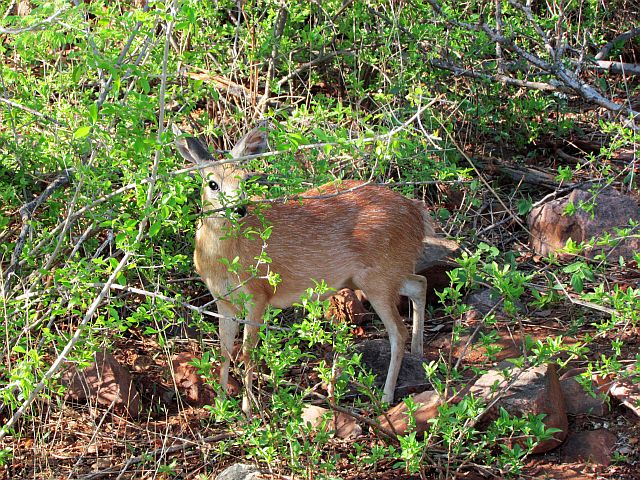
We find a gentle little Sharpe’s Grysbok hidden silently in a mesh of straw and he does not dart off but stares at us and continues to browse

A small but very vocal bird catches our attention as he perches on top of a tree and calls out loudly for attention. It is clearly a pipit – perhaps a tree pipit but I think it’s a striped. Pipits are so confusing.
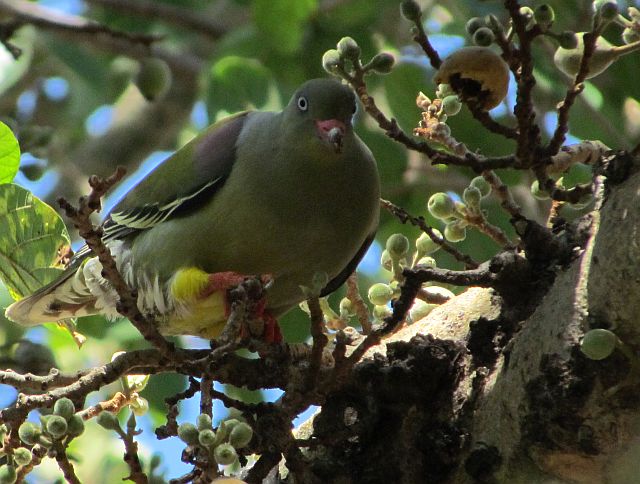
At Babalala picnic site we get out to stretch our legs and go to the loo. The palm swifts are still darting in and out of the palms and there is much activity among the starlings and hornbills all hoping for titbits from those who are having their breakfast. The wild fig tree has to have a green pigeon and after a good look and a very stiff neck I find one.

Earl is sure that the gravel road had a no entry sign but sees someone make his way up it. So when we leave we investigate and find that the no entry sign is turned the other way – so obviously it’s only closed at certain times – perhaps when the road is too muddy from heavy rains?
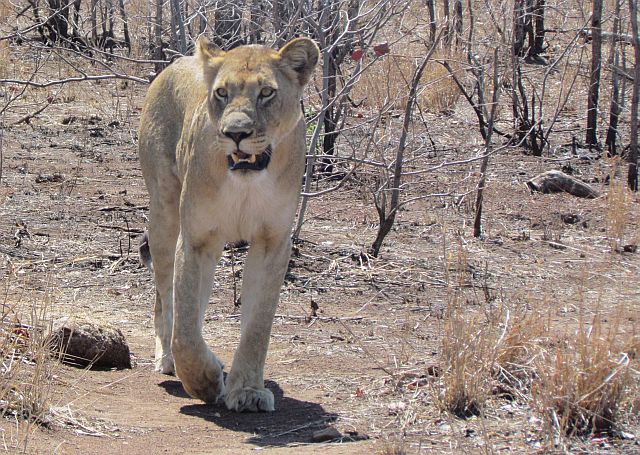
Not far down the road we see a car stopped. We ask the occupants what they have seen. Lion – But they’ve dropped down into the long grass and we can just make out the odd ear and flick of a tail. The first car moves off but we stay to see if anything happens. We think there are two or maybe three. We are about to give up as even though it is before 9 o’clock it is very hot and we believe the cats are settling down for a very long nap. But then one gets up and starts walking. He is mostly hidden by the long grass and we try to keep him in sight as we move on the parallel road. “I am sure he is going to come onto the road and cross over,” I say. But Early is certain he won’t and wants to drive on. There is a gap and we see him as he walks through followed by two more. We move on quickly. By this time there is a queue of about five cars behind us and they obviously see the lions too. At last we turn a bend and the lions came into a clearing. We stop – and they come right toward us – but there are more than three and they just kept coming – I lose count after 9. I am sure there are at least 12 lionesses. We get beautiful views of them approaching our car and then crossing in front of us onto the other side of the road and merging in with the straw coloured grass.
Here is just one of them – a pity we couldn’t get a group shot – we kept shooting as each individual comes into view.

Wow what a sighting and being in front we have the best view of them all. Eec urges Earlybird to move on to allow others a chance too but the lions kept coming and when we move forward one stray lioness breaks into a nervous trot and races ahead to cross in a safe place. After this magnificent experience we are all on a high – it is our first lion sighting in the seven days we’ve been in the park.
It’s a long way to Mopane from Punda Maria and we break our journey with a stop at Shingwedzi for lunch. We have a table next to the window and bird watch as we enjoy our chicken burgers. A young employee named Phany comes over and says – I see you are bird watchers. He helps us identify a female sunbird – white bellied and says that to him the birds are the best part of the park. Of course we agree. “You’ve made my day,” he says “It does my heart good to see people enjoying our birds”
We continue to see lots of lovely animals and birds but the highlights are a martial eagle perched in a tree and groups of elephant showering at the water tanks. It is so amusing to see them put them trunks up and over the wall, resting their tusks and then showering themselves in a cool spray.
Check in at Mopane goes very well. The service is friendly and I am even asked how I’d enjoyed Punda and what wildlife I’ve seen in the park.
Our cottage, number 43 is a huge surprise – it has a magnificent view over the river, is spacious and comfortable and on a 45deg C day it is a relief to find that the aircon works efficiently.

0

Caravelle Cruising in Kruger October 2011 Day 6 & 7

FRIDAY 21 OCTOBER 2011 PUNDA MARIA

We pack plenty of snacks, juice a flask and sandwiches as one cannot buy food at Pafuri or Crook’s corner where we are heading today. We see lots of bird – always in parties – suddenly gathering and creating a fuss then just as quickly dispersing into the silence. It is at first quite overcast so the light is not good for photography but we see brown-headed parrot, white-fronted bee-eaters, red-billed firefinch, blue waxbills, common waxbills, emerald spotted dove, wire-tailed swallow, among other more common species.

The scenery in the north is just too beautiful and it is great to see baobab trees in various stages of leafiness.

At Pafuri a harrier-hawk (gymnogene) flies overhead, we see a red-chested sunbird and a Bennet’s woodpecker’s loud knocking got us looking for and finding him in a nearby tee.
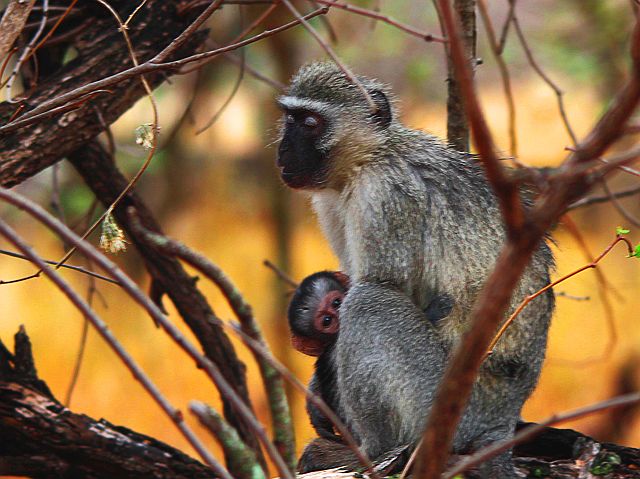
There are lots of monkeys in attendance trying to steal our hot cross buns and they are quite aggressive. This is because homo idiotus thinks it’s cute to feed them. We hear a red-chested cuckoo (Piet-my-vrou) and a fish eagle. We also see a skaapsterker rapidly cross our path – which freaks me out – and nyala are grazing on the river bank.

En route to Crook’s Corner we find two broad-billed rollers in a tree. In one of the leafy afrits I notice a big bird fly into a tree. “I think it’s a hornbill,” I say “but there is something different about it.” It turns out to be a trumpeter hornbill. He is sitting on the trunk above a hole and clearly feeding his wife! We watch in fascination for a while and he poses beautifully for pictures.

At Crooks’Corner we find two beautiful giant kingfishers, a fish eagle flies by and EEC sees him fly with a fish into some thick foliage. We observe him with our binoculars but photography is impossible.

Other interesting birds are white-fronted lapwings and white-fronted bee-eaters.

A hippo rests in the shallows.

And the crocodiles laze on the sunny bank. One looks particularly scary.

On the way home a huge tusker appears and makes EEC nervous when he comes right up close to the car before crossing behind us.

We arrive back at Punda at 3 o’clock and sit on our stoop to watch birds and other visiting creatures. This mongoose pops up to say hello

In the late afternoon we walk around the camp and visit the hide. There are some impala and buffalo having a drink then a troop of elephants arrive and enjoy themselves in the mud. Just as the light fades dozens of double banded sandgrouse fly in – too bad the light was not good enough to digitally capture them.

SATURDAY 22 OCTOBER 2011 PUNDA MARIA
We make an early start this morning and are on the road by quarter past six. We have not gone far when EEC callsout – Hyena – and there on the side of the road we see him on what looks like a very old carcass of a nyala. We watch him tear at it for a while and then he drags it off and out of sight.

Our first birds are yellow-fronted canaries and as usual where we see one species many come along to join in the fun. A green pigeon tries to hide from us

The yellow-bellied greenbul is not shy

The orange-breasted bushrike teases us with his beautiful call but as soon as we spot him and aim our cameras he flits off before we can take the shot.
This is the area for broad-billed roller and today with the skies being clear we see quite a few of them showing their colours to perfection.

Some birds, though, just love to show off and are not at all camera-shy. A wahberg’s eagle next to a nest catches our attention when he cries out and his mate comes to join him. She stomps in the nest for a few seconds then alights onto the branch next to him. The nest now ready, they decided it is time to do what is needed to be done before an egg or two can be hatched. Afterwards we are delighted to watch a clear show of affection as they kiss and preen each other.

Not long after this exciting stop we find a martial eagle perched high in a tree.

It is good to see groups of animals gathered together in some areas – large groups of kudu, impala and nyala, huge herds of buffalo and elephant and families of warthog among them all. We found one particularly big family of mom, dad and six piglets.

We returned to camp at half past 10 and find a mother and juvenile marabou stork near the staff compound.

We decide to rest during the midday heat. We have a lovely outlook from our cottage and get many feathered visitors. We sit outside relaxing and downloading photographs while grabbing the camera now and then to snap a bird or creature. Last night we had a nagapie, duiker and civet pop in while we were eating supper on the deck.
We go out again at 4 and enjoy some good birding and game viewing. It is fun to find a varied group of species in a clearing dominated by a large tree. Baboons are foraging, feeding their babies and watching their children climb and tumble. 

Nyala and Kudu shared a meal of delicious leaves, impala grazed nearby while their young gambol and play, full of the joys of spring.
Our afternoon highlights are a green-winged pytilia who shows nicely and allows a reasonable portrait to be taken.

Later this red-crested korhaan appears at the side of the road.

I make spaghetti bolognaise for dinner and tomorrow we say goodbye to Punda and make our way to Mopani.

0

Caravelle Cruising in Kruger October 2011 Day 5

THURSDAY 20 OCTOBER 2011 SHINGWEDZI TO PUNDA MARIA
6 o’clock found us packed and ready to make our way for a three-night stay at Punda Maria. We saw a number of mammals before the first bird made an appearance – baboons, impala, giraffe and elephants. And then what a thrill to get a tawny eagle first up!

Tawny

Just before 7:30 as we approached Babalala picnic site EEC called out – Hyena – and there on the side of the road a big boy bathing in a puddle.

He didn’t stick around but finished his ablutions and then sauntered off down the road and into the long grass.

We found Babalala clean and neat, the ablutions had paper, soap and towels and the floors had just been mopped. And there was life to observe. More ground hornbills for our list – A male and female with a single juvenile marched across the veld from the waterhole towards the picnic site and then off into the bush.

Magpie shrikes swooped down into the trees, swooped off again and returned several times.

We observed palm swifts checking out the underside of the dead palm leaves where they like to make their nests – but no nests were there yet.

After a cup of coffee and a hot-cross bun we continued our journey to Punda.
On the side of the road we found an injured fish eagle which we reported when we got to Punda – not sure what happened about that.
We were too early to check in so did one of the drives around the area. Buffalo dominate the area and we found ‘heaps’ of them. Elephants appeared from time to time too and it is definitely the place to come if you want to see nyala.
A highlight bird was the broadbilled roller but he did not give us good photo opportunities.
It was a lovely drive and we saw lots of animals and birds. It was 12 o’clock when we got to Punda and so we checked in and then had lunch at the restaurant – I am happy to report that the food was excellent. H2 and I ordered chicken hamburgers and Earlybird and EEC, who clearly came from the same womb, had croissant tower.
We were delighted with family cottage 23 and decided not to go out for an afternoon drive. Instead we unpacked, rested then went for a swim and visited the hide. Although the waterhole was very muddy there were sections where the animal still drank and we were thrilled when a troop of 23 elephants came down soon after we arrived.
We had a lovely braai for supper and retired to our very comfortable bedrooms for the night.

0

Caravelle Cruising in Kruger October 2011 Day 4`

Wednesday 19 October 2011 Shingwedzi

There was a thunderstorm in the night and this morning it is still overcast with the threat of rain.

We leave camp at 6:00 an our first bird of the day is a marabou stork on top of a tree.

At 7:00 we take one of those little afrits that have a view over the river, is beautifully wooded and gives the opportunity to observe all kinds of beautiful birds.  Four ground hornbills strut along the bank .

Ground Hornbill

Then the party begins and the Cape Town physios, chiropractors and myosiopractitioners are going to be very busy when we return with stiff necks, sore backs, displaced hips and sciatica.   But it will be worth it – we watch the green woodhoepoes scurrying up and down the tree trunks and village weavers brighten up the scene with their brilliant yellow feathers. A cardinal woodpecker pecks busily looking for tasty wood-dwelling morsels and an orange-breasted bushrike appears in his splendor but refuses to sit still for a photo shoot.   Klaas’s Cuckoo calls out tantalizingly and finally Earlybird finds him and we get lovely views.   The light is not condusive to good photography but we don’t mind – just seeing the birds is enough for us.

Further along we are delighted to observe two yellow-billed hornbills apparently preparing a hole in a tree for occupation.  They both collect mud from a nearby puddle, fly to the hole and push the mud in.   Presumably, when the female is ready she will go into the hole and seal herself in, lose all her feather and rely on Dad to bring her nourishment till the chicks fledge.

Y.B. Hornbills preparing nest

At 9 o’clock we are watching yellow witogies, a paradise flycatcher, black-headed oriole, red-collared barbet,  and green woodhoepoes when a car pulls up beside us – Its another Sanparks Forum member and we exchange greetings and discuss sightings.

And then we bump into our cousin and her new baby.

The white-fronted bee-eaters are everywhere and so photogenic.

At 10:50 we arrive at Shanoa Look-out. EEC goes to the loo and returns to say they are in a horrible state.  That’s a pity because we’ve never found the long-drops a problem before – they’re always kept clean and serviced regularly.   Hopefully this is a one-off where for some reason things have become briefly out of control.

We get back to Shingwedzi at midday and decide on a few hours rest time.   We have a snack lunch and Earlybird has a nap while H2, EEC and I sit outside and observe the local wildlife.   We make a good list of birds.   Glossy starlings, brubrus, Go Away birds, Yellow-throated petronias (bathing in a puddle), southern black tit, yellow-billed, red-billed and grey hornbills.

Yellow-throated petronia bathing

The Caravelle departs for the afternoon drive at half past three.  Once again we visit an  area near the river which is well-wooded and green and we find lovely birds.  At Kan Nie Dood Hide we see saddle-billed stork, Goliath Heron, greenshank and yellow-billed storks.  Hippos are wallowing and crocodiles look frightening as they lay on the river bank.

We continue our drive and stop to take wonderful photographs of two brown-headed kingfishers.  Imagine our delight when they kiss each other and then mate right in front of us.

Mating Kingfishers

Before arriving at camp we find a terrapin crossing the road.

Ray and Colette  come for drinks and we spend a very pleasant evening with them.   We chat about our two countries (they’re from New Jersey) and we are thrilled that they enjoy South Africa and our national parks enough to return year after year.   Lovely to meet you Ray and Colette!

0

Caravelle Cruising in Kruger October 2011 Day 3

Tuesday 18 October 2011 Letaba to Shingwedzi

We are all packed and ready to go by 6:00 this morning.   The first birds of the day are little swifts flying overhead then black headed oriole, brown-hooded kingfisher and  white-backed vultures

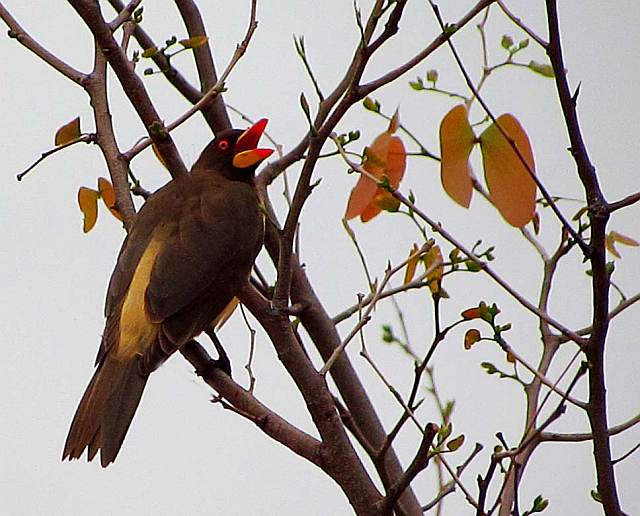
It is an overcast, cool day making driving the long distance to Shingwedzi quite pleasant.  Our plan is to stop at Mopani for breakfast between 9 and 10 depending on how much we see to delay us.   We make regular stops to observe the usual zebra, giraffe, elephant and buffalo.   l I remind my companions that we are in yellow-billed ox-pecker area and that their preferred client is the buffalo.   “I can see one with a red bill and yellow tip,” pipes up Eec.   Ha – that’s it!   And it is the only one among all the red-billed lot.  He flies up into a tree for a perfect portrait.

Yellow-billed ox-pecker

Further on we stop to observe an non-descript bird, and argue as to the likelihood of it being  is Sabota Lark.  Definitely a Sabota says H2 and Earlybird and I agree and prepare to move on.  “Hang on a minute,” says Eek in a  perfectly calm voice – “I can see a leopard in a tree!”

“You can’t,” come three disbelieving voices making a rapid 180   “What, where, are you sure!”   Yes of course she’s sure!   You can’t mistake a leopard in a tree!   It is about 250m from the road but oh so clear through our binoculars. She is languishing lazily on a branch and givese us a disdainful stare.   Eagle-Eye Carrol, you’ve earned your stripes,” I proclaim. – “You mean spots,” quips H2.   EEC is not amused.

Leopard in tree

All this adrenalin and it is only half past nine!    A more calming sighting of a small herd of tsesebe with some zebra and wildebeest settle us down before we arrive at Mopani for breakfast at 10 o’clock.

Tsebe and baby

What a lovely restaurant this is, and the health breakfast – muesli and fruit salad in tall glass – is highly recommended.

We take  our time and then browse in the shop which seems quite well stocked  and decide that on our return from Punda we will enjoy spending two nights here.

The next leg of the trip has us enjoying wonderful birdlife and we see a bateleur flying overhead, different francolins foraging busily on the side of the road, puff-backs flitting and calling their clicking call but refusing to pose for a portrait and red-headed weavers among other birds working busily in the trees.

Elephants, giraffe, zebra and buffalo are once again in evidence but no cats and no rhino.

A little steenbok stops us in our tracks when we observed him eating bark from a tree – is if for toothache or some other medicinal reason?

For a while there is not much to see so we chat while constantly checking the bush for the flick of a tail or the twitch of an ear.   Earlybird brakes and points up and there in an abandoned nest of some or other large bird is a Vereaux’s Eagle Owl.   And to our delight we could see the baby’s head peeping over the top of the twigs.  Perfect rented accommodation for the owls.

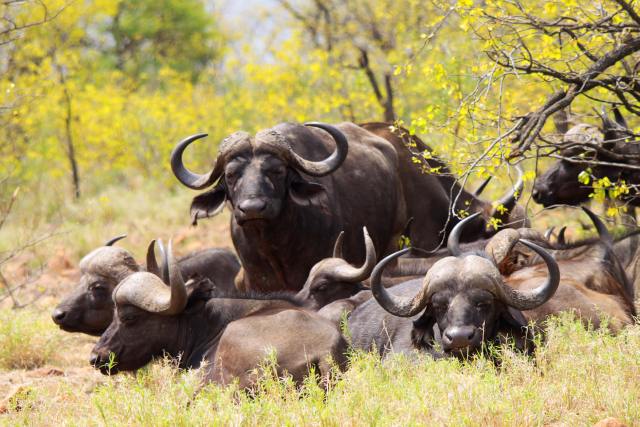
Just before arriving at Shingwedze we come across a big troop of ellies drinking in the river.  Then a large herd of buffalo starts coming down the bank to join them – what will  happen now – there isn’t  much room.  Well – the elephants politely make way for them and saunter off to their left and soon disappear leaving the buffs to enjoy a communal drink.   There is civility in nature.

At Shingwedzi check in is quick and smooth and we are assigned Cottage A29.   It is a little on the small side and a better option might have been two smaller huts with outside kitchens as the stoeps have low walls which make sitting outside somewhat cozier.  But we’re not complaining  – just being in Kruger is enough for us.

0

Caravelle Cruising in Kruger National Park October 2011 Day 2

Monday 17 October 2011

Today I declare Monday a day of rest.   Earlybird is whacked.   He insists on doing all the driving both from home to the park and in the park too.   He stresses when I drive so I just give in and allow him to be in control and then try and make everything else as easy as possible.   Of course he doesn’t like to be still and if he’s awake he just wants to get out there and find the critters!

So this morning we sleep in late.  My sister-in-law now to be known as Eec – (Eagle Eyed Carrol) and I wake first and have a cup of coffee. When H2 emerges we go for a walk along the path next to the river.  It is a cool and overcast day – not great for photography but we manage.

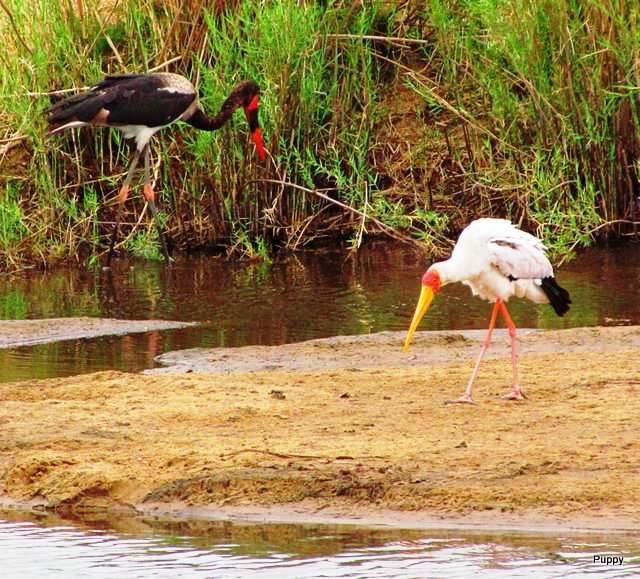
We didn’t get far because of all there is to see.  Saddle-billed storks, yellow-billed storks and a little egret are  busy in the shallow water among the reeds.

Immature Saddle-billed Stork and Yellow-billed Stork

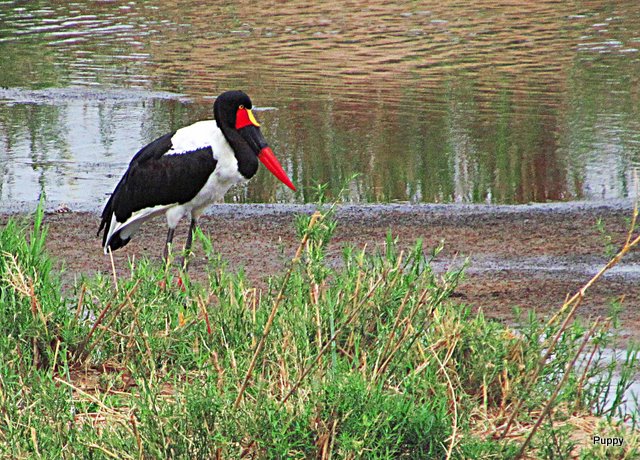
We spend ages watching them and other little birds that make  appearances from time to time.  Eventually my battery decides it has had enough and we return to the cottage for breakfast.  It is after 9 and Earlybird is relaxing on the stoop with his cereal and a cup of coffee.    At 10:00 we pile into the Caravelle and head along the H1-6 and take a loop.  First bird up is a yellow-billed kite then looking down on the river we spot a saddle-billed stork and a Great White Egret – two wonderful birds to start our drive.

Adult Saddle-billed Stork

The very first time I saw kudu females grazing silently in the early morning soft light I fell in love with them and that feeling has never faded.  So seeing them over and over again is always a thrill.  I just love their wise eyes and milk moustaches.

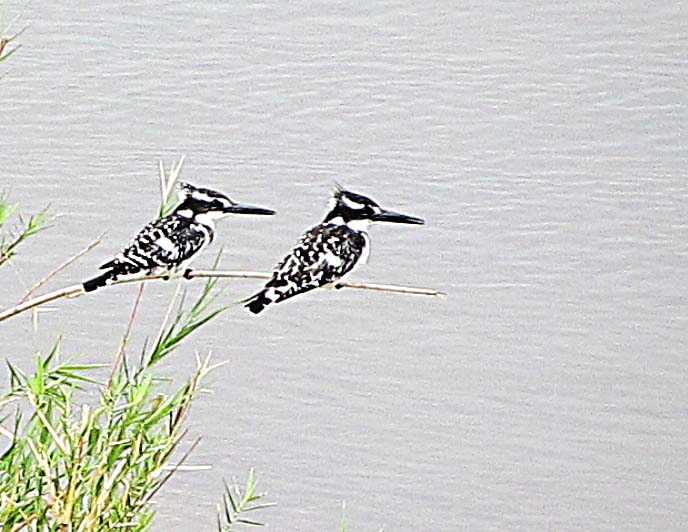
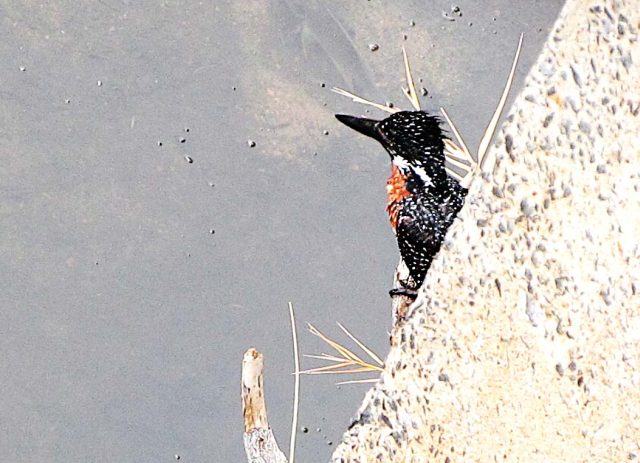
At first it looks like there is nothing to see when we stop on the bridge – Earlybird wants to drive on but we persuaded him to let us out for a leg-stretch and then we startto see things….. Eec draws our attention to a giant kingfisher whose head is poking out from under the bridge.  There are four pied kingfishers busily hovering and diving and catching tiny fish.

Kingfisher Couple

The Giant appears and is immediately mobbed and chased from their territory.

Giant Kingfisher under the bridge

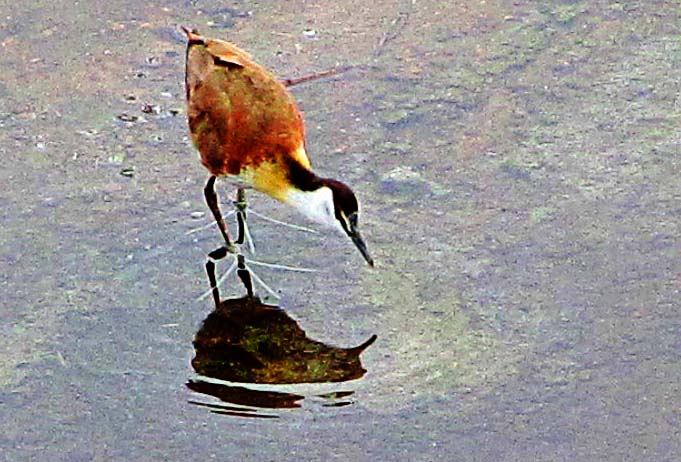
A single immature jacana is foraging on his own, a woodsandpiper struts about and a three banded plover looking as handsome as ever makes a brief appearance.

Juvenile Jacana

We move on and do the Engelhard loop.  There were stretches of nothing interspersed with the usual impala, zebra and kudu but none in huge numbers.  We were surprised in fact to find herd animals, singly, or in groups of less than five.  Perhaps when you live in close proximity to others of your species you need some alone time to reflect, look inward and find yourself?   But then again perhaps not – after all don’t they gather together for protection? No time for reflection when a lion is on your tail.

Birds as usual were our focus and we were not disappointed.   The route we took was green, wooded and near the river most of the wayWe found many bee-eaters, an osprey, jacana, squacco heron, white-browed scrub-robin, fish eagle, long-billed crombec and a sabota lark.

Kudu, elephant, buffalo, hippos and zebra also made frequent appearances.

At Matabeni Hide we find jacana, crocodiles and hippos and little else.

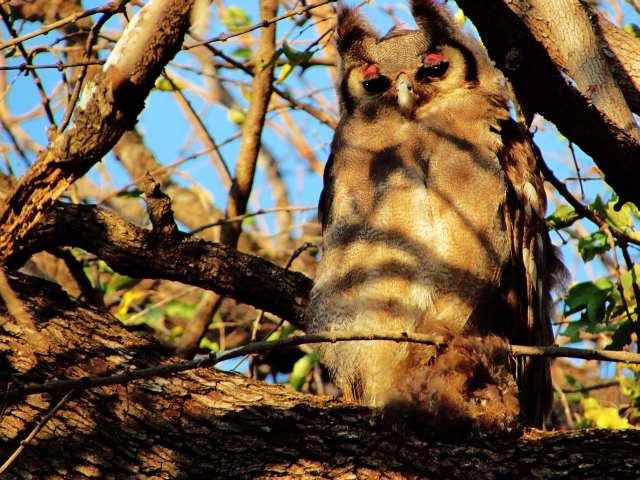
We return to camp for lunch and a rest then go out again at 4 o’clock.    It is a short and rewarding drive.   Chugging along slowly in a wooded area with lots of little “afrits” I keep my eyes up and scan the trees.    “Stop! Vereaux’s Eagle Owl,” I call.   This involves reversing and neck stretching and disbelief – where – I can’t see anything – you’re imagining things.   “There,” I insist – look behind that green leaf, in that crook of branch – no you’re looking in the wrong place – wait there’re two of them.”   Eventually I get everyone to find the place and Earlybird manoeveres the car into the perfect position so that we all got a perfect view of a Vereaux’s eagle holding prey in his talons.

Vereaux's Eagle-owl

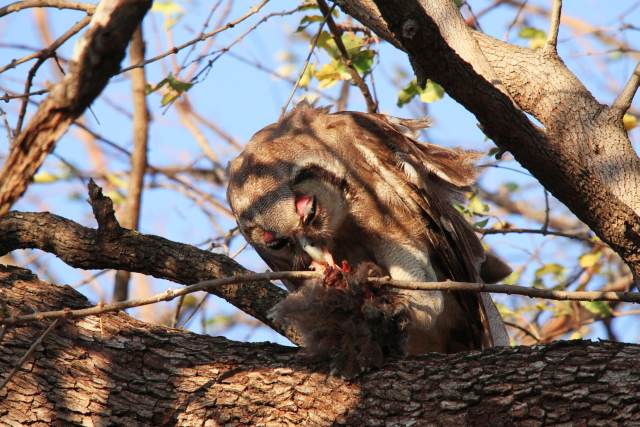
Oh wow – what a sighting – we guess it is a francolin – amazing as owls usually eat their prey whole but this chap is tearing it piece by piece and devouring it.

Feasting on a francolin

The photograph frenzy goes on for ages and we are the only car observing for quite a while – when others come we point out the two owls, folk look for a few seconds then take off, probably saying – strange people these bird nerds!  But boy do we have fun.   In order for H2 to get her fair share of good shots we swap places without getting out of the car – quite a feat for two ladies past their prime! I find that if I lie on the back bench of the caravel I can get quite a good view but while I am there I hear – knock knock knock and there next to my window is a Cardinal Woodpecker tapping into a tree.   Two good spots for the price of one!

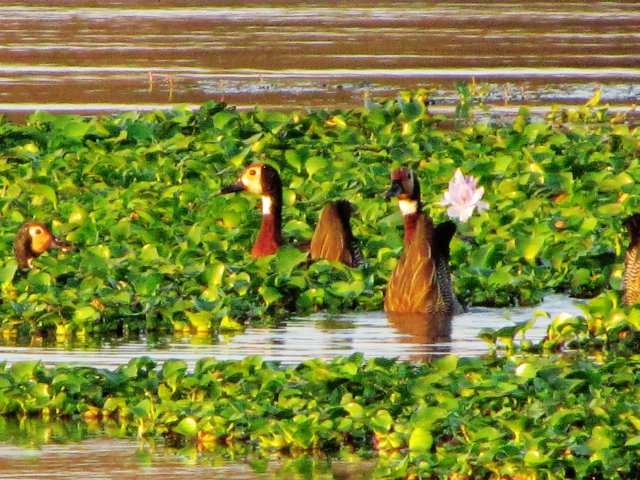
Moving on to a view of the river we find white-faced ducks and little bee-eaters.

White-faced ducks

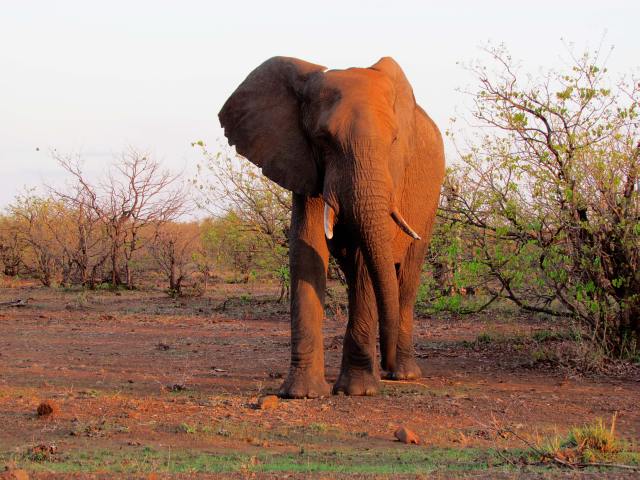
And just before getting back to camp we come across a lone elephant right next to the road.  We always treat ellies with respect but do not admit to Eec that we’re afraid of them.  She is quite sure they charge at the slightest provocation – or without!   Don’t go to close, Brother.   Careful he’s going to charge”   Don’t worry – he won’t we assure her then – an outlet of breath through the trunk, a stamp of the foot and a slight mock charge.  A collective intake of breath in the car then a burst of nervous laughter as Earlybird puts his foot down.

0

Caravelle Cruising in Kruger Day 1 – October 2011

Sunday 16 October 2011

I won’t go into too much detail about the build up to our departure from Cape Town to The Kruger National Park – but “Drama” reared her head and increased the tension and mad rush that always goes along with getting organised for a major trip.   But by 6 ‘clock the day before we left a driver’s window had been fitted, the shopping was done, a back treatment enjoyed, my classroom was ready for take-over and most of the packing ready to be loaded into the vehicle.  Just one thing left for me to do – get to school and Prompt the final performance of Terry Pratchett’s “Maskerade”.   I am delighted to report that it went off superbly and no-one fluffed their lines – or if they did they covered up to perfection.  But did I sleep well? -Of course not – I was like a kid before Christmas and if I got 2 hours shut-eye it was a lot.  I was up and out of bed by 3:15, got the food packed into the cool box, the last minute items into the car and then I woke my darling husband and sister-in-law and we were off to collect Heather an hour later.

It was overcast and cool in Cape Town – we had some rain en route but totally dry from Worcester onward. Lots of stop/goes meant we only arrived at our B&B in Bloemfontein @ 4 o’clock – but what a lovely comfortable place. Heather and I went for stroll, saw many birds in the lovely gardens of Universitas and then returned, sat in our hostess’s garden and watched Orange River Witogies, olive and Karoo thrush,  red-eyed bulbuls and others come to the feeding table and bath in the birdbath.    Mr. Delivery then brought dinner and after a relaxing meal and glass of wine we were all in bed before 9:-)

4:00 a.m. found us back on  road and this time there were fewer delays.  We stopped for breakfast at a One-Stop Wimpy and then again for a leg stretch at a place where you could see buffalo and rhyno at a waterhole  from a lookout behind glass.

Our route took us past Dullstroom and The Blyde River Canyon – which was greatly enjoyed. But when we entered Palaborwa Gate at 2:15 p.m. I was in heaven.   KNP – its my most  favourite place in the world.  I can’t describe the feeling I get when I pass though her gates – but she welcomes me and I am  at peace.

Earl’s sister is our reluctant companion along with Heather (who is not at all reluctant!)   Carrol loves animals and lives on the Mountain-side of Miller’s Point where many creatures visit her fynbos garden and for years we’ve been trying to persuade her and her husband to come with us to Kruger.  This time our fourth couldn’t make it and so we invited Carrol – she refused but Vere persuaded her and so she reluctantly agreed.  I think, today, she’s glad she did.

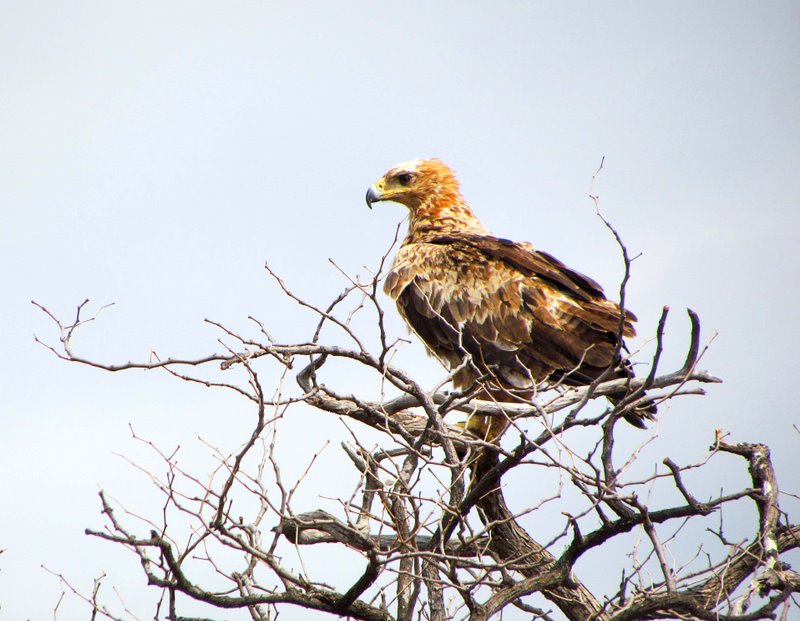
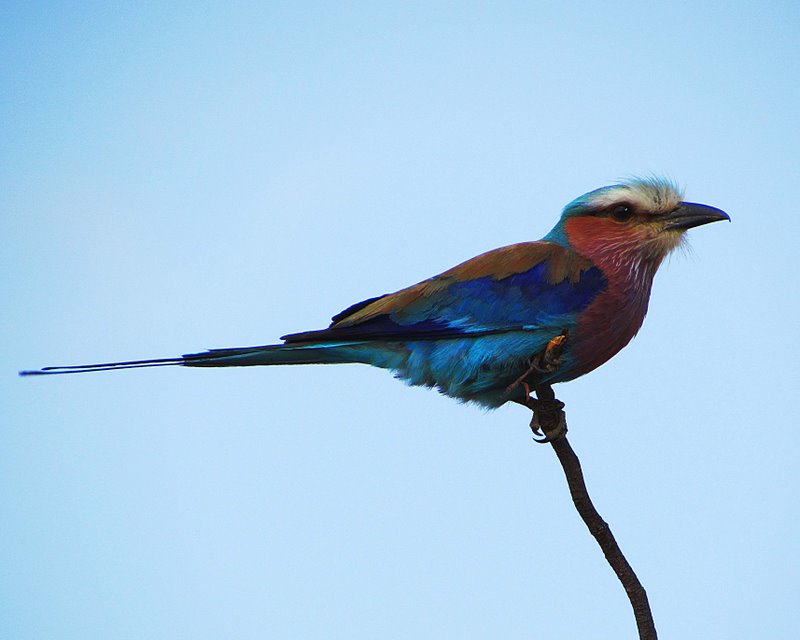
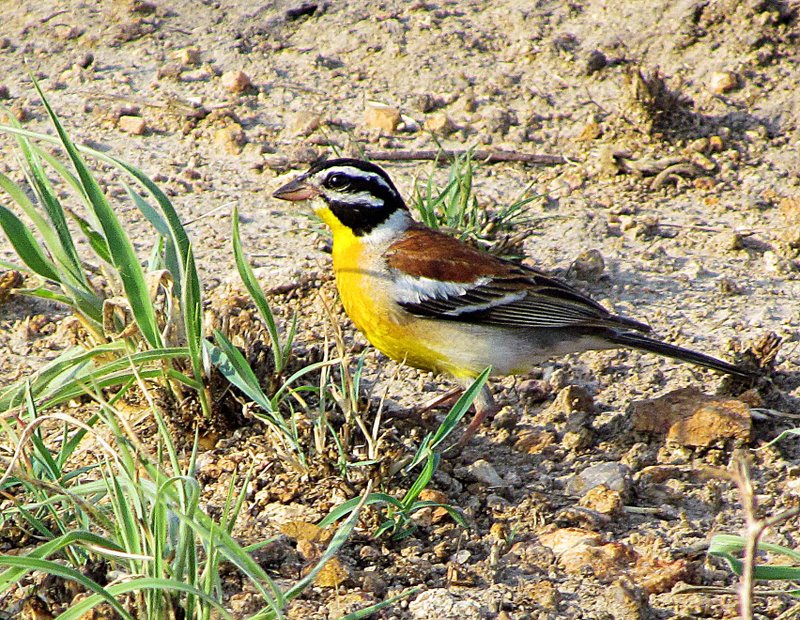
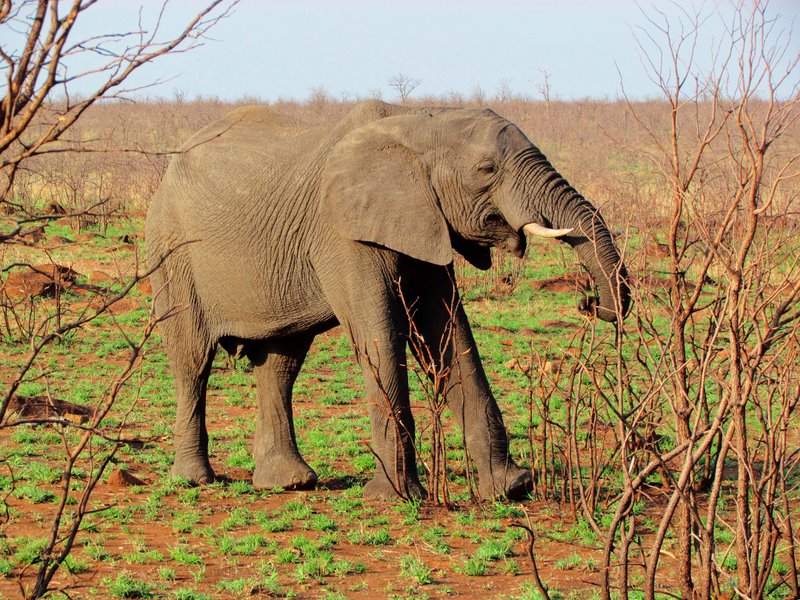
Its 50km from the gate to Letaba – the speed limit on tar is 50km per hour.  We managed 11km in the first hour due to the many stops we made to see buffalo – our first mammal -even before impala – elephant, warthogs, zebra and also impala.   But it was the birds that kept us stopping most of the time.   We got a beautiful tawny, a Wahlberg’s next to his nest and a martial albeit too far for a decent photograph.  We also saw a bateleur at a distance.   The little birds were everywhere – blue waxbills, golden-breasted buntings, a female indigo bird, lots of glossy starlings, yellow-billed hornbills and go-away birds.

Tawny Eagle

Lilac-breasted Roller

Golden-breasted Bunting

Young Ellie

And these are all the pics I’m going to show you as it takes ages downloading when using your phone as a modem and I need to get out there and see the critters!